Thoughts on Becky G
By Sergio C. Munoz at Intelatin, LLC. Featuring Dr Craig Wilder at MIT, Ana Valdez of the Latino Donor Collaborative, Wil Dog of Ozomatli & Sabrina Gonzalez at the USHBC

When I started on the radio in 2011, I was able to create whatever I wanted from scratch. But the audience was young Latina/os at Cal State Long Beach. As I was conceptualizing what I wanted it to be, I knew I wanted four pillars to this radio program: Music / Film / Food / Money
But something incredible happened at that time. Verso Books first published Racecraft: The Soul of Inequality in American Life by sociologist Karen E. Fields and historian Barbara J. Fields on October 9, 2012. They sent me a copy and I devoured that book up. It changed my life. My (Mexican) life became: A) The time I lived before reading Racecraft and B) The time I am living after reading Racecraft.
As I got deeper and deeper into it, I started inviting leading thinkers into this dialogue. I wanted young Latina/os at Cal State Long Beach to hear this wisdom for themselves. I knew that they wouldn’t hear it any place else. So, I made it the fifth pillar. I archived it all here:
https://intelatin.substack.com/p/racecraft-the-soul-of-inequality
Among my favorite thinkers on the show was Dr Craig Wilder. He is a professor of history at MIT and upon being so influenced and impressed by him over a period of three years, I asked him to the the educational godfather of my only child.
Occasionally, I get tripped up by the depth of something that happens in the public domain and so I call Brother Craig to have him help me understand. He always seems to have the right words to explain things to me.
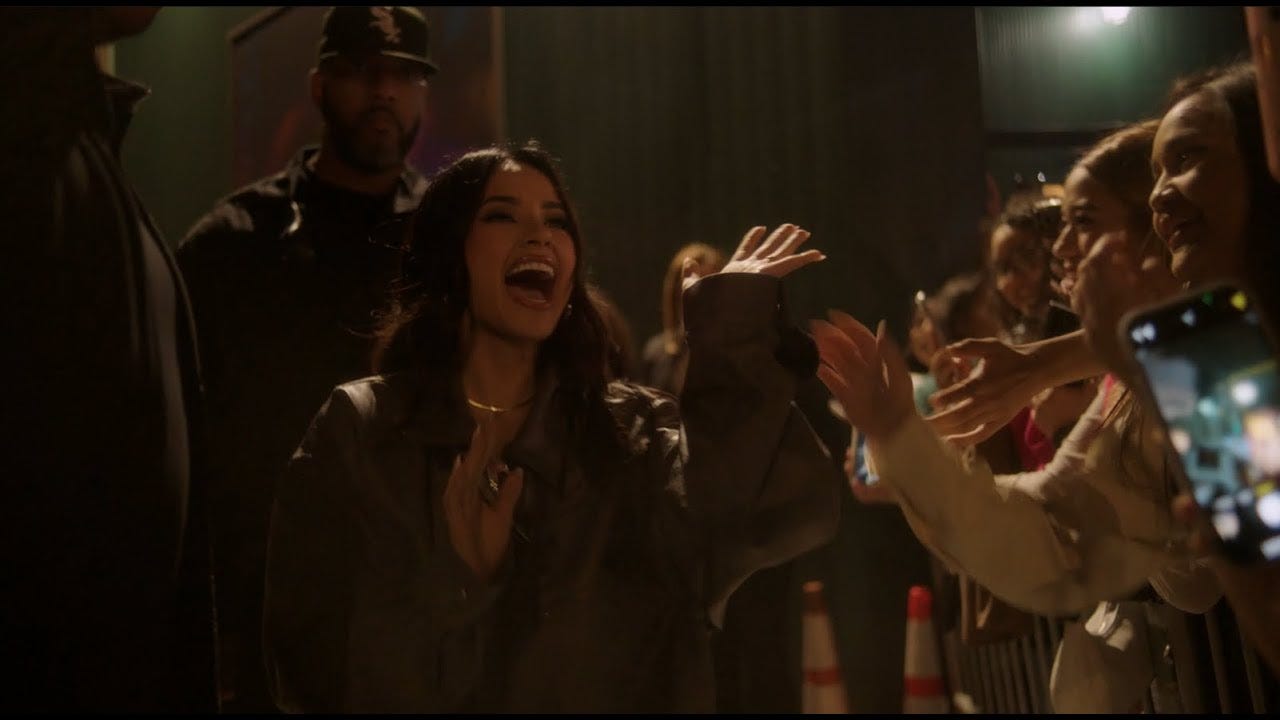
This season, it was thanks to Becky G. She is having a moment of sorts and within that moment she released a documentary on Netflix called, Rebecca. In a poignant mid-section, she shows footage of her deceased Mexican grandfather at one of her concerts and in the audio, the grandfather tells the audience via Becky G:
“No dejes de decir que eres de gente humilde.”
I called Brother Craig to have him help me explain this phenomenon:
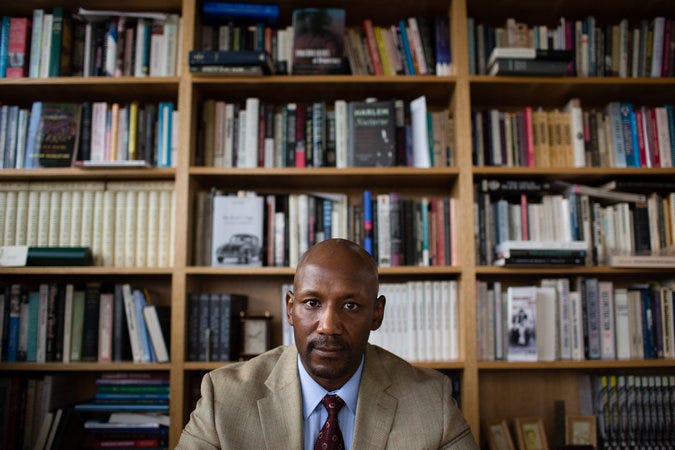
Sergio: First, let’s define what it means to be humble in your opinion.
Craig: For me, being from a humble background is really about remembering and respecting the journey that you took and the people who traveled with you. We were taught as kids to remember the neighborhood, the neighbors, the family, and all the people who contributed to your journey across time. How you actually practice that is complicated.
Sergio: You’ve acknowledge to me that you had a sketchy humble childhood but you’ve also acknowledged that you became the outlier that got past it. It’s complicated to hold yourself up as an example of someone who made it out of those humble beginnings….
Craig: It is complicated and risky because one runs the possibility of diminishing the barriers to mobility. Once you’ve jumped a hurdle, it doesn’t seem that high, and it’s easy to pretend everyone is running the same race. The people who clear the hurdles often aren’t the best athletes, just may well be the most advantaged. The Spanish translation of the quote from Becky G’s grandfather resonates with me because you find a version of that in every community.
Sergio: Regarding your roots, especially the culture of Brooklyn in the 70s and 80s, making such a monumental moment for Brooklyn. Hip Hop from that era came to dominate global culture in a variety of ways. Up until the era of Puff Daddy, you had to adhere to that humility. You had to be humble to be “real.” Would you agree?
Craig: I would agree cautiously. My relationship to hip-hop is odd; I feel awkward being a commentator because I was there, but I wasn’t a close follower. A lot of people read themselves into the moment fairly aggressively. I did the opposite. It was happening all around me and I was completely uninterested. I was far more interested in the Yankees than the world of rap, for much of my teenage years. It rarely touched my imagination even when people close to me were fully engaged.
Sergio: What about as a historian?
Craig: Absolutely. It is a pivotal, transformative moment, but I prefer to depersonalize it. No doubt. I was literally in Brooklyn for that and I was in college in the Bronx, those epicenters, and I completely disconnected from the threads. I look back now and how all of that excitement was happening all around me.
Sergio: But that authenticity part. Your relationship with your mother, your relationship to Brooklyn, you have traveled with that, right?
Craig: Yes, absolutely. The early world of rap in the late 70s. That part stays with me. The attempt to capture reality through this creative youth culture at all these different levels from graffiti, to dance, to perform music, to document the realities of the urban world. I did take notice of that.
Sergio: I see a great correlation between that and what might be considered Mexican culture but I think is more Chicano culture. Folks from Mexico like Becky G’s grandfather but they are living in Los Angeles and raising English dominant grandchildren in their garage. Here is the hard question not as a judgment or as a criticism: What is to be gained from a highly commercialized and merchandized pop star revealing her “authenticity”?
Craig: There is no need to be critical. She has every right to do it. It is probably the moment when she feels stable and secure enough to address that part of her life, it is a deeply personal thing. It is her obligation. Artists often struggle with how to place their background in their professional presentation. Linda Ronstadt’s Spanish language album is a great example of that. The timing of it is a stage of life thing and a very intimate thing. The relationship of that journey. Her intent, her nostalgia, perhaps just a relationship she wanted to recognize at that moment. The easiest part is the boast; the hardest is the complex, confessional description of what those roots mean to them now.
Sergio: You used the word “obligation,” which is complex. The grandfather giving her direction telling her that she must do this for the rest of her life. To tell humble fans that there is an obligation to that humility. It’s like being told to hold onto that humility even when you are no longer living that life.
Craig: It requires a certain maturity to do that with confidence. You can anticipate criticism or negative reactions. The timing reflects maturity. When you move beyond a casual slogan and start talking about what those roots actually mean to your life today, that is where vulnerability and maturity come in. That is the next level of analysis.
Sergio: Do you lead with that BedStuy humility in your personal life?
Craig: No. I remind people that I come from humble origins, but I don’t live a humble life today.
Sergio: But you don’t lead with Boston even after having spent the last 20+ years of your life in Boston and New Hampshire. If somebody asks, you do say you’re from Brooklyn, yes?
Craig: Never do I claim Boston. The question of my background is often asked but not because it has any interest or importance. Rather, it presents me as someone who can speak about that background. I am uncomfortable speaking for poor people because I believe they can speak for themselves. We often take established people and position them to ventriloquize the poor because society doesn’t actually want to hear from the poor themselves. We want to hear from middle-class intellectuals who translate the words of the poor into terms that are comfortable for themselves.
Sergio: Is “ventriloquizing the poor” a concept you coined?
Craig: I’m stealing that from political scientist Dr Adolph Reed. I remember reading about how he used it to describe how scholars and journalists responded to Hurricane Katrina by speaking on behalf of poor people, effectively rendering them silent and invisible in the process.
Sergio: Dr Reed is deep. I remember talking to him for my radio broadcasts.
Craig: Yes, he is scary profound.
What I’ve come to understand through my ongoing dialogue with Brother Craig is that the performance of humility by those who have achieved material success is a precarious, high-stakes endeavor, one that demands an exponential level of intellectual and emotional maturity. True integrity, as Craig points out, requires us to acknowledge that while somebody’s origins may be humble, their present reality might not; thus, the real work isn't in performing a past we’ve moved beyond, but in resisting the urge to speak over those who are perfectly capable of defining their own conditions, needs, and aspirations.
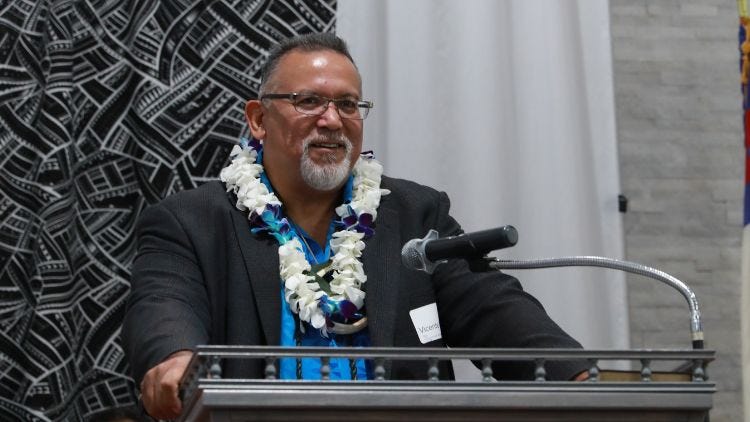
Apropos of the word, obligation, here are more words to live by that were produced in this series, courtesy of Dr Vicente Diaz:
“As Indigenous people, we have obligations that define what it means to be human. To live in kinship, to have reciprocity and with mutual care-giving. Our "Prosperity" is our authenticity to those obligations.”
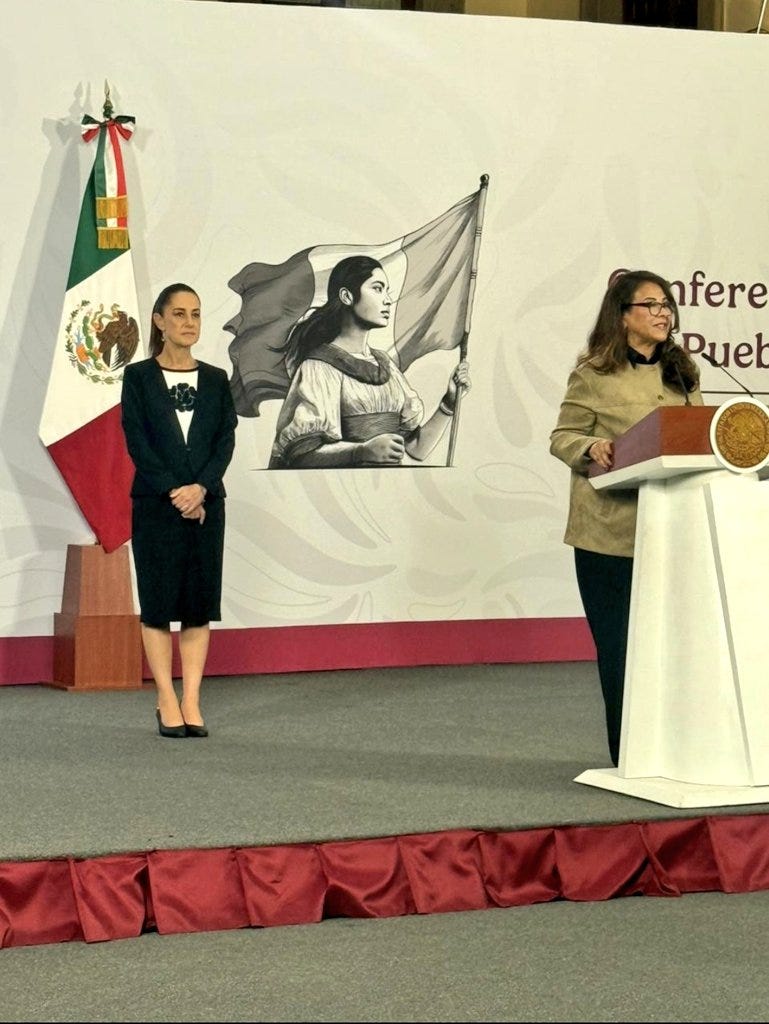
I have interviewed Ana Valdez, CEO of The Latino Donor Collaborative, twice at Intelatin. The more I interview her, the more I am impressed with her perspective. I called Sister Ana to have her help me explain this phenomenon, the obligation of Becky G to humility.
Sergio: Ana, what does it mean to you to be humble?
Ana: Yes, I am Mexican, born in Mexico, now I am Mexican American so I consider myself a US Latina. Gente humilde, originally was based on money, people that are poor in general. The term has evolved. Now, gente humilde are people with values, hard working, dignified, honest, loyal, optimistic, unpretentious, proud, authentic. A set of characteristics that make us who we are. We have an ethic that makes us welcomed everywhere in the world. When people know us, they love us.
Sergio: We are both from Las Lomas de Tecamachalco and we have similar backgrounds but when I left Mexico City, I lost all of my social capital. Let’s talk about the generational levels to this and the evolution to get to Ana in 2026.
Ana: Losing our social capital is an important topic. Usually, in the common immigration story from Mexico to the USA, the immigrant has nothing to lose. They adopt the American dream and start from zero. The story of the Latino is such a blended story. Our humildad is so important for us to keep because we keep that blend. Honoring the family, don’t let success erase your identity, carry your origins with pride, represent your people. That is important for all of us because we all eat the same food, we were born with the same values and we listen to the same music.
Sergio: Speaking of music, I love trios. That is my Mexican music. The soundtrack of my Mexican story. Tell me what is your Mexican music.
Ana: I am very mariachi. They are amazing. They signify weddings, baptisms, graduations … when I hear a mariachi, I can’t stop myself from dancing. They represent everything we are. Yesterday, I was in Washington DC and I heard Juan Gabriel in a restaurant and I hadn’t listened to him since like twenty five years ago. When I heard it, it got to me. Maná, I keep listening to. They are a part of me. They stay with me forever. Flans, Timbiriche, they were cute but they didn’t go into my soul.
Sergio: So when does Becky G’s music enter your world?
Ana: During the pandemic, I saw her and really loved her. I followed her right away. She is so talented and so smart. I realized that she was an activist and that she was putting her capital behind pro-immigration issues. She is so amazing.
Sergio: She has a new album coming out, she has a documentary, she is at the World Cup in Mexico and the United States, she is making a purposeful effort to identify as a Latina. In the doc, her grandparents come across as the type of people who will do anything and everything for their children and their grandchildren. A crowd of young Latinas cheer for the grandfather and his words at the concert when he gives Becky her obligation to humildad. What do you think it means?
Ana: I’m guessing that the reason why the crowd gets energized when they hear that is because it is our heritage. Being proud but not arrogant. Owning your successes without oppressing others. Knowing your story but when it comes down to it, you never lose your empathy. You don’t work to abuse anybody and become insensitive. He must have meant that. Less about socio-economic reasons, but to give back because you have power. To leave this world a better world. The grandfather did his job with Becky G spectacularly. The audience feels this and we take it home with us.
Sergio: Let’s drill down on women, young Latinas in the USA, LDC data, do we focus on Becky G, Becky G’s future daughter or Becky G’s future grandchild?
Ana: Becky G! The most successful report we have ever done was about Latinas. We did it with Kantar. The largest consumer research company in the world. Once they say something to corporations, it becomes the truth. Once they tell the brands about our youth, it is the truth. We got 600+ brands signed up after releasing the report. Why is Bad Bunny performing at the Super Bowl? Why is Karol G headlining Coachella? Why is the Mexican jersey the best selling? Why is Modelo the top selling beer? I think Latina youth will save the world! They are unapologetically bi-cultural and they want to be respected.
Sergio: It must happen in waves. We rise and then someone tries to bring us down but we rise again.
Ana: Yes, but the trend is always up. Pan backward and look at the data and even if there are peaks and valleys, the overall trend is dramatically going up. Becky G’s generation is so powerful. She is an extraordinary example but even for folks that haven’t achieved that success, you can see it in the data. One of the values in our community is empathy. Statistically different in comparison to non-Latinos. 15-20 points different. These young Latinos are including friends from all communities. They are getting power and they aren’t abusing. They’ve seen their parents get sidelined and they won’t do it. Young Latino candidates are emerging all over the country. These are leaders that are leading with decency. Things are happening. The growth is slow but it is happening. Twenty years from now, you will better understand it. They are voting, working, studying, watching content.
Sergio: I love your bullish perspective.
Ana Valdez redefines humildad as a powerful, value-driven framework where integrity and roots remain central despite professional success. This cultural evolution, embodied by figures like Becky G, signals a rising generation leveraging their bicultural identity to drive empathetic, transformative leadership across the American landscape.
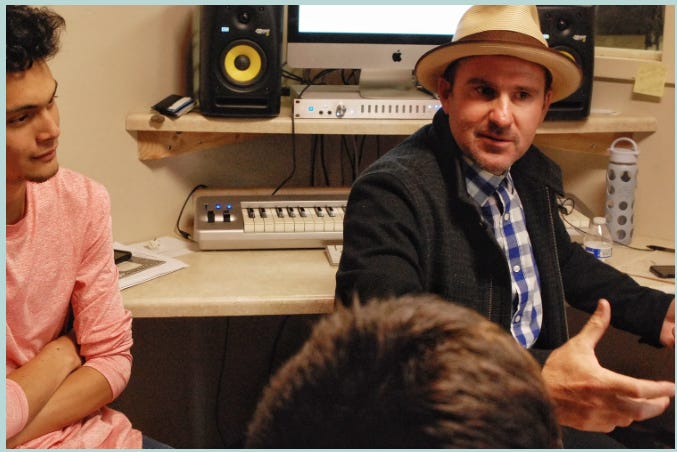
As my co-founder in the On Prosperity series, I oftentimes want to get Wil Dog’s perspective. He has a troubled history of trauma, illiteracy, poverty and addiction but similar to Dr Wilder, he was able to hurdle over those very real and difficult issues.
The one hurdle that has always intrigued me the most was the breakup of his nuclear family. It is my opinion as an outsider that this occurred, in part at least, because his father had an obligation to the Communist party and at age 8, his mother no longer felt that obligation in the same way. When all transpired, Wil Dog and his mother lost the community that they knew with the party and in a series of unfortunate events, they became homeless and struggled for the next decade until Wil Dog joined Macy Gray as a bassist.
Sergio: Dr. Vicente Diaz at UCLA told me that indigenous peoples have an obligation to kinship. He used that specific word, “obligation.” When I told Brother Craig about Becky G’s concert—where she plays a video of her deceased grandfather saying, “No dejes de decir que eres de gente humilde,” Craig also saw that as an obligation. Did your father feel an obligation to the Communist party? How did you understand it?
Wil Dog: I would say it’s an obligation to the people, and the party was the vehicle. My dad’s obligation to history was envisioning a more equal world—one where currency wasn’t just money, but what you could give back to society as a whole.
Sergio: What did you think of that obligation? Did you want to have the same one, or did you turn that into what Ozomatli became, or did you ignore it altogether?
Wil Dog: It’s just in me. I learned that obligation: Is what I’m doing only serving me, or is it serving others as well? Even if I don’t follow the specific ideology he studied, the sentiment is there—needing to better something outside of myself. If you look at my musical career, I put all my energy into things that weren’t just about me, like Macy Gray or starting Ozomatli, where I dedicated years of my life with zero money.
Sergio: Why were you so dedicated? What was your obligation then?
Wil Dog: I don’t know that I thought about it, other than it’s part of who I am. I saw the band as a vehicle that was in line with that obligation.
Sergio: So, instead of the Communist party as the vehicle, yours was Ozomatli.
Wil Dog: Yes, it served the same purpose. It was doing good for the world, representing that spirit of humanity, the poor, or the anti-colonial side of things. We were always searching for the roots of the music, which usually led us back to Africa.
Sergio: Is that still alive in 2026 for you?
Wil Dog: For me, absolutely.
Sergio: Do you think you understand the fan base in 2026?
Wil Dog: It’s mostly English-speaking Latina/os.
Sergio: When I saw the demographics for Ozomatli a few years back, it was:
Most Active Markets: Mexico City, Los Angeles, Guadalajara, San Francisco, Dallas, Chicago, Denver, Houston
Latina moms who like to dance
70% are the primary decision makers in the household
86% own smartphones
$1T in annual consumer spending
Over Indexing Spending Categories: Food & Beverage; Beauty & Health; Clothing
Your fan base is older, perhaps the moms of the typical Becky G fan. Do you have an opinion on what a young Latina fan of Becky G would understand from her grandfather telling her to forever remember she comes from humble people in Spanish? It struck me that the crowd cheers at the shows when they hear this….
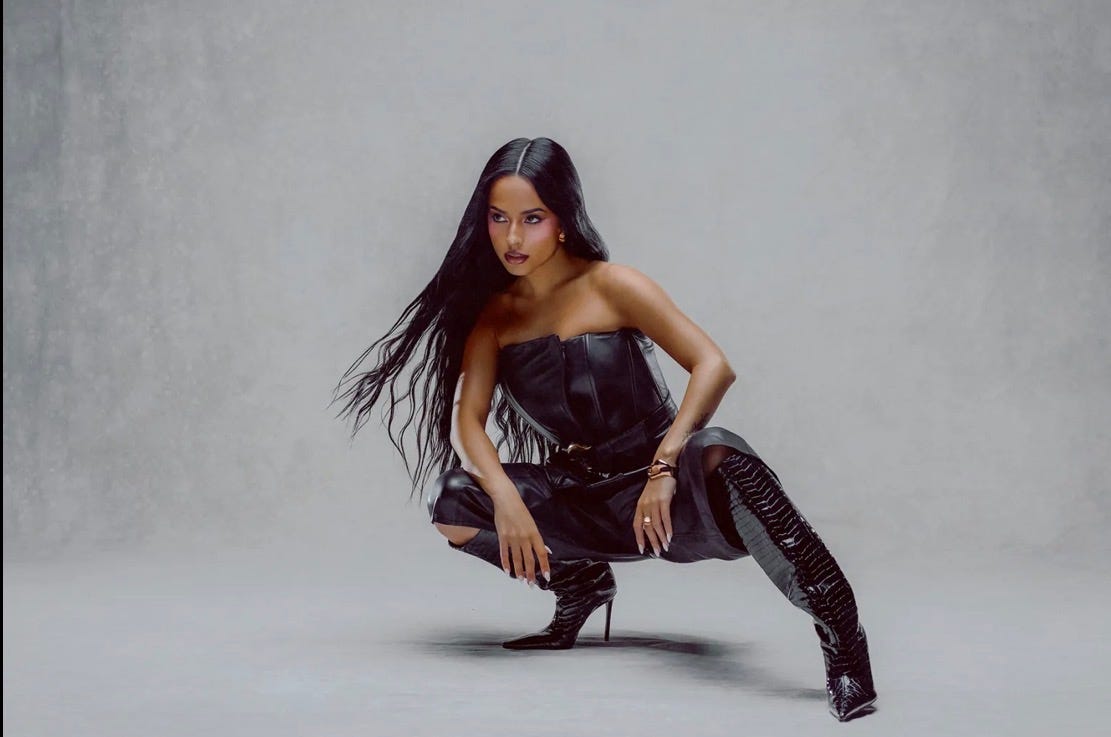
Wil Dog: She has a lot of support, and she is that person—approachable in her own way. I think for someone like Becky G, that’s her family personality, too—doing things for the family first and not for herself. It’s not good or bad; it’s just how some things are.
Sergio: I was reflecting on that from my identity as a Mexican. We are always putting our Mexican self-identity first. We never stop doing it. I never stop. I still claim Mexico even though I left Mexico City in 1978!
Wil Dog: You can say that for your generation but the history is so long. What we’re living is such a small part of human history. When you zoom out, are these labels, Jewish, Mexican, white, just confinements we’re living in because of the human power structure?
Sergio: In terms of Ozomatli, it does feel like the Mexican side of the band is the one that comes through the hardest, even with a Japanese percussionist, a Black percussionist, a Jewish bassist, an Anglo drummer, it feels to me that the three Latinos make up the majority of the brand of the band and when you total them up, they read as Mexican.
Wil Dog: You’re probably right but I think it’s also because we are from Los Angeles. When we sing in Spanish, it comes from that identity. If you rewind the tape, this was Mexico, and those roots are still here.
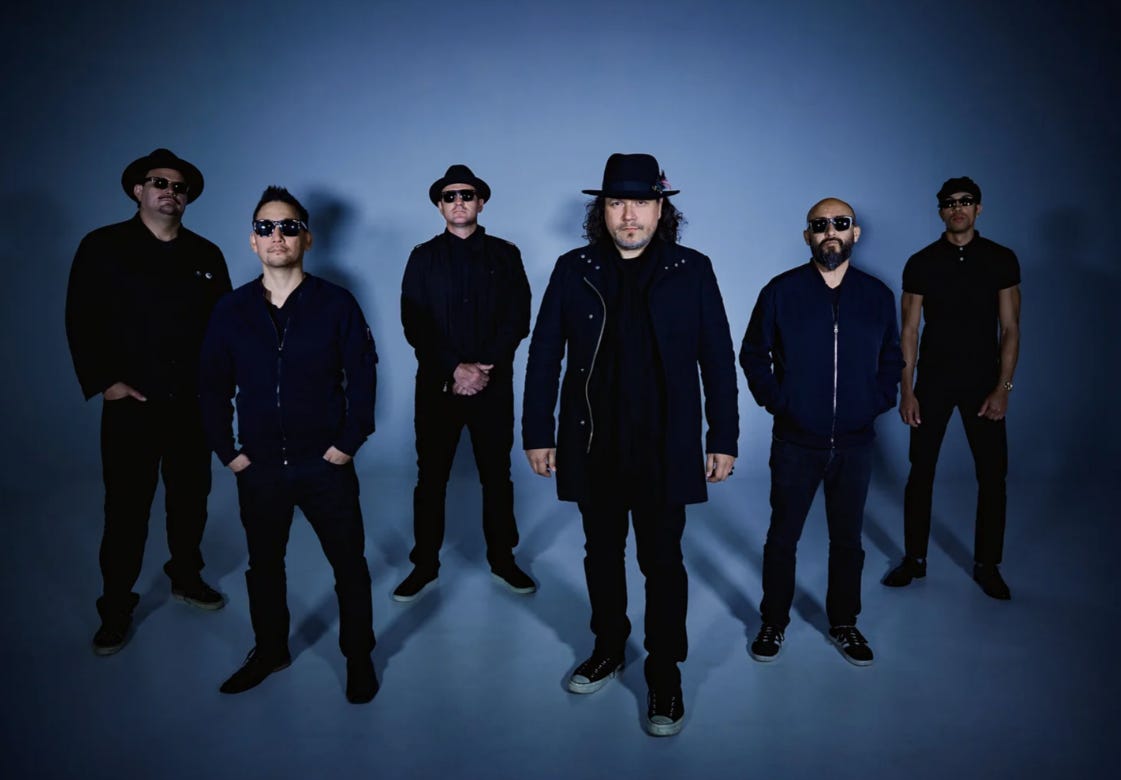
In this dialogue, Wil Dog showed me that inherited obligation need not be tied to an ideology, as he transformed his father's communal spirit into the cultural force of Ozomatli. Our conversation hints that this same weight of duty might be driving Becky G, whose own public performance of "gente humilde" functions as a vessel for her family legacy. Just as Ozomatli uses music to anchor its identity in deep-rooted history, Becky G navigates the tension between commercial success and her enduring obligation to honor her origins, hinting that the duty to serve one’s community often supersedes the individual self.
When Dr Wilder told me:
“It is probably the moment when she feels stable and secure enough to address that part of her life, it is a deeply personal thing. It is her obligation. Artists often struggle with how to place their background in their professional presentation.”
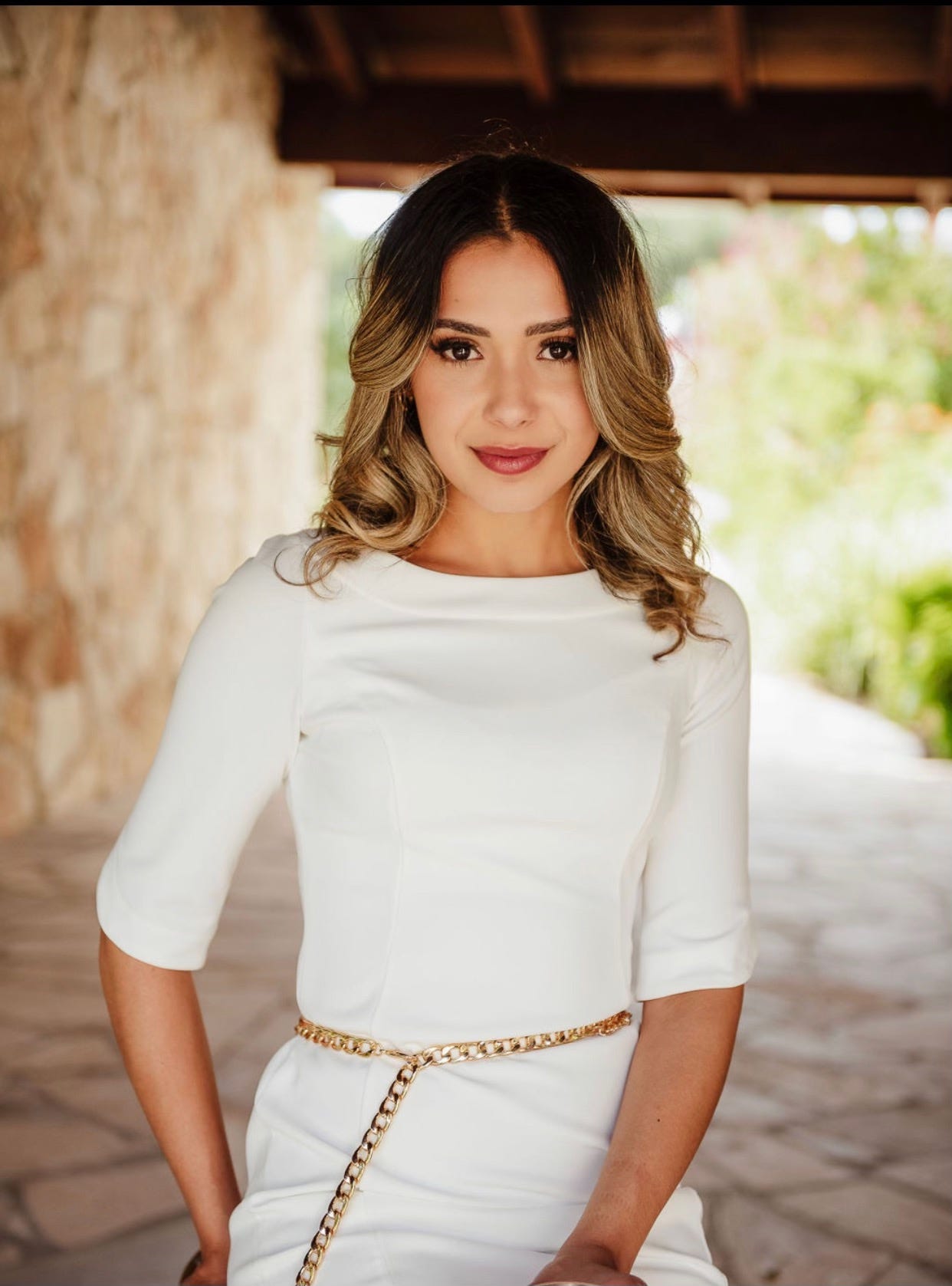
I called Sabrina Gonzalez, Chief of Staff at the US Hispanic Business Council, to double-click on that with a gaze focused on woman-owned-enterprise and entrepreneurship. What follow is an excerpt from my interview with Sabrina.
Sabrina Gonzalez: First starters, HUGE fan of Becky G. Latina artists spreading their wings, Latinos in general, Bad Bunny at the Super Bowl, I love that we are taking center stage even in places where people don’t speak our language. It is an incredible step. I love seeing us in these high profile situations.
Sergio: As we lobby in support of US Hispanic business owners, as we understand the pulse of Latina entrepreneurs hitting their moment of economic safety and security, what are your thoughts on that moment?
Sabrina Gonzalez: I wear multiple hats. My role at the USHBC in advocacy. And I am a small business owner myself. I come from small business owners. My father came to this country with nothing on a boat that sank on its way to the USA. He was helicoptered over and his shoe fell off and he kicked off the other one because he didn’t want to step onto the USA with only one shoe. I know the story. He was entrepreneurial and launched businesses. I feel that spirit. There is no shortage of Hispanic owned businesses. We struggle with scaling upwards but we don’t struggle with the spirit. Speaking for myself, I didn’t wait for safety and security to launch. I launched when my husband and I got married, we put our measly savings together, we got credit cards, we got co-investors, we are in the rental income business, we had a mortgage on the line, we lacked safety and security completely but we were well thought-out.
There was a moment when there was a proof of concept. I looked at the calendar and every single night was booked. I remember the feeling. The high season bookings just kept rolling in. It was in that moment that I began to see myself as an entrepreneur. It was beautiful. I looked backwards and I ran to my mami and papi and I told them: Everything you taught me has allowed me to reach this point. I was so happy. It’s given me the confidence to know that as an entrepreneur, I will live to see another day. We will recoup and recover, over and onward. It was in that moment that I felt comfortable looking backward and forward.
Sergio: How old were you when you saw the calendar fully booked?
Sabrina: 24!
Sergio: Where are you now?
Sabrina: We have grown considerably. I was pregnant when I got our first property, by the time we got to the third property, I was pregnant again. Our family is growing, our business growing, everything is going in the right direction.
Sergio: At the USHBC, are you seeing that flying your heritage flag is seen as an asset or as a liability?
Sabrina: I love it when Becky G talks about being 100% Mexican and 100% American. In our work, we see how politicians either hide it or show it. Folks need to be genuine and it needs to be year-round the way Becky G does it. It has to come from a place of authenticity and she showcases that in the best way. She knows there is respect and honor in doing so. From my perspective, I was born in the USA, I do not have any connection to Cuba, I haven’t been to Cuba but my Cuban heritage has shaped me to be who I am. When I moved from Miami to Washington, DC, I knew in that moment that I was Cuban. I realized that I am a minority. I am brown. I am Latina. I didn’t understand that until I was in DC. It was a moment where I knew I needed to be connected to my father’ story and it became a place of pride and remembrance.
#Intelatin #Media #Music #Rebecca #Netflix #BeckyG #USHBC