Thoughts on American Pachuco
By Sergio C. Muñoz at Intelatin, LLC. Featuring David Alvarado, René Millán, Tlaloc Rivas & Amanda Salazar.
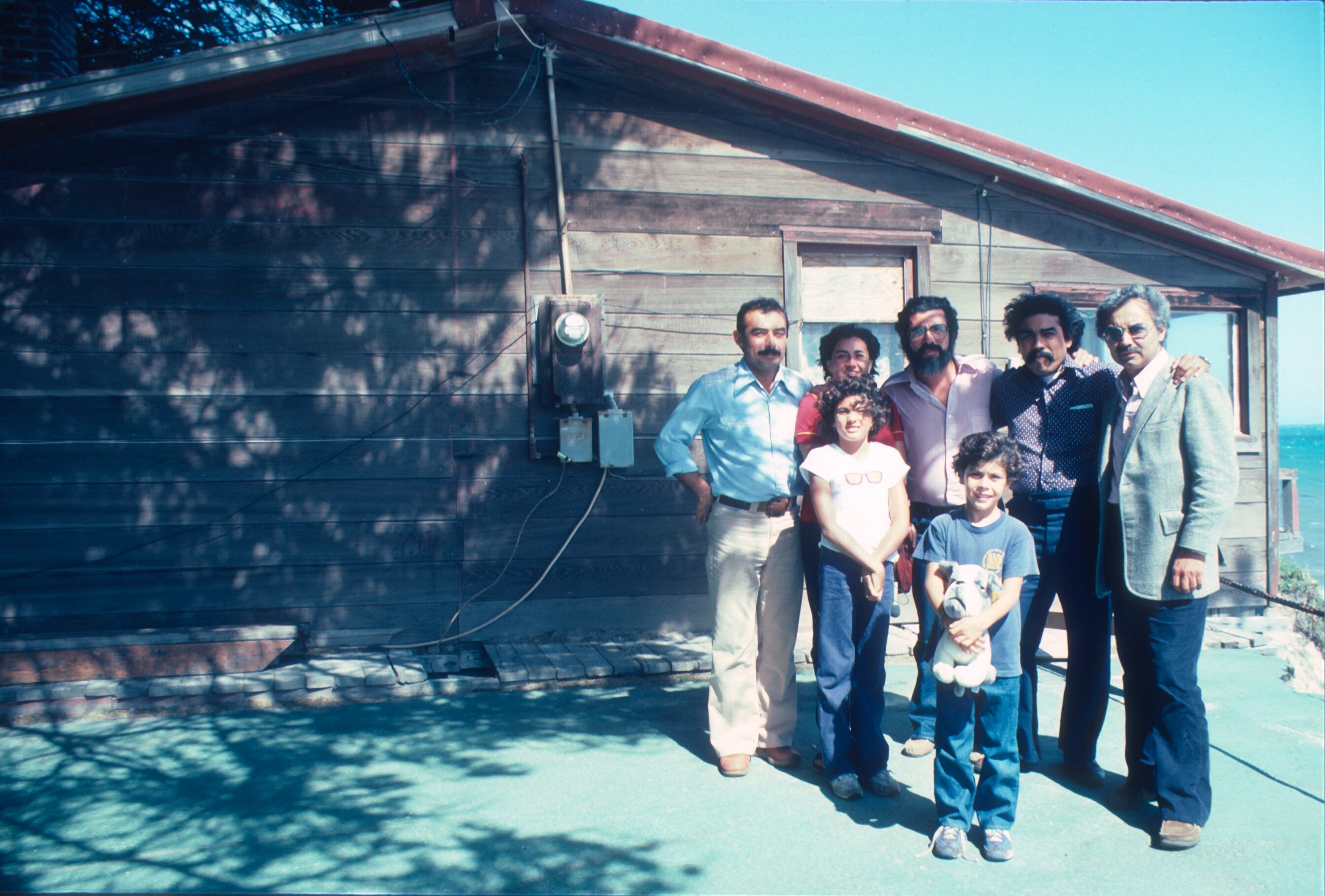
When I was seven-years-old, I lived in a Mexican family from Mexico City, stationed in Orange County. For my father’s work as the managing editor of La Opinión, it was decided that we needed to make a pilgrimage to Santa Barbara to meet with the intellectual leaders of the Chicano Movement and to San Juan Bautista to meet Luis Valdez. My greatest memory of this trip was that we took a photograph in front of Aldous Huxley’s cabin. (Huxley was in Santa Barbara in 1959 delivering a lecture series titled "The Human Situation.")
From this trip until I left for college in 1991, we were always in the presence of the Chicano movement as it relates to media and entertainment. Most of the time, we would meet at the Biltmore in downtown Los Angeles and the highlight was always when Lalo Guerrero would sing, “There’s No Tortillas” - I saw Carlos Santana and Jerry Garcia dueling guitars in these rooms. Eddie Olmos was always there. An early in her career Salma Hayek sighting once. And, I made a friendship that always inspired me with Nativo López of Hermandad Mexicana, a disciple of Bert Corona.
We knew this niche as “La Cucaracha Circuit.” I knew this was a negative way of self-identifying but we also saw it as playful somehow. Behind the curtain, it meant that the mainstream (strictly Anglo) was/were not interested in our niche and never would be. We would be allowed to exist on the fringes but we would never cross over and I believe that if you talk to Luis Valdez, or Eddie Olmos, or Cheech Marin, or Jimmy Smits, or Esai Morales, or Lou Diamond Phillips, or Benjamin Bratt, or any of our heroes from this niche, they would tell you that they longed to be accepted and contracted in the mainstream.
I purposely do not connect women from our niche because they do happen to cross over, Rita Moreno, Jennifer Lopez, Sofia Vergara, Salma Hayek, Selena, Jessica Alba, Becky G … and that might be a different story. And in general broadstrokes, you typically wouldn’t find (Colombian) Sofia Vergara at a Chicano awards assembly in Los Angeles addressing our wounds and complaints about enemies like Pete Wilson and Daryl Gates.
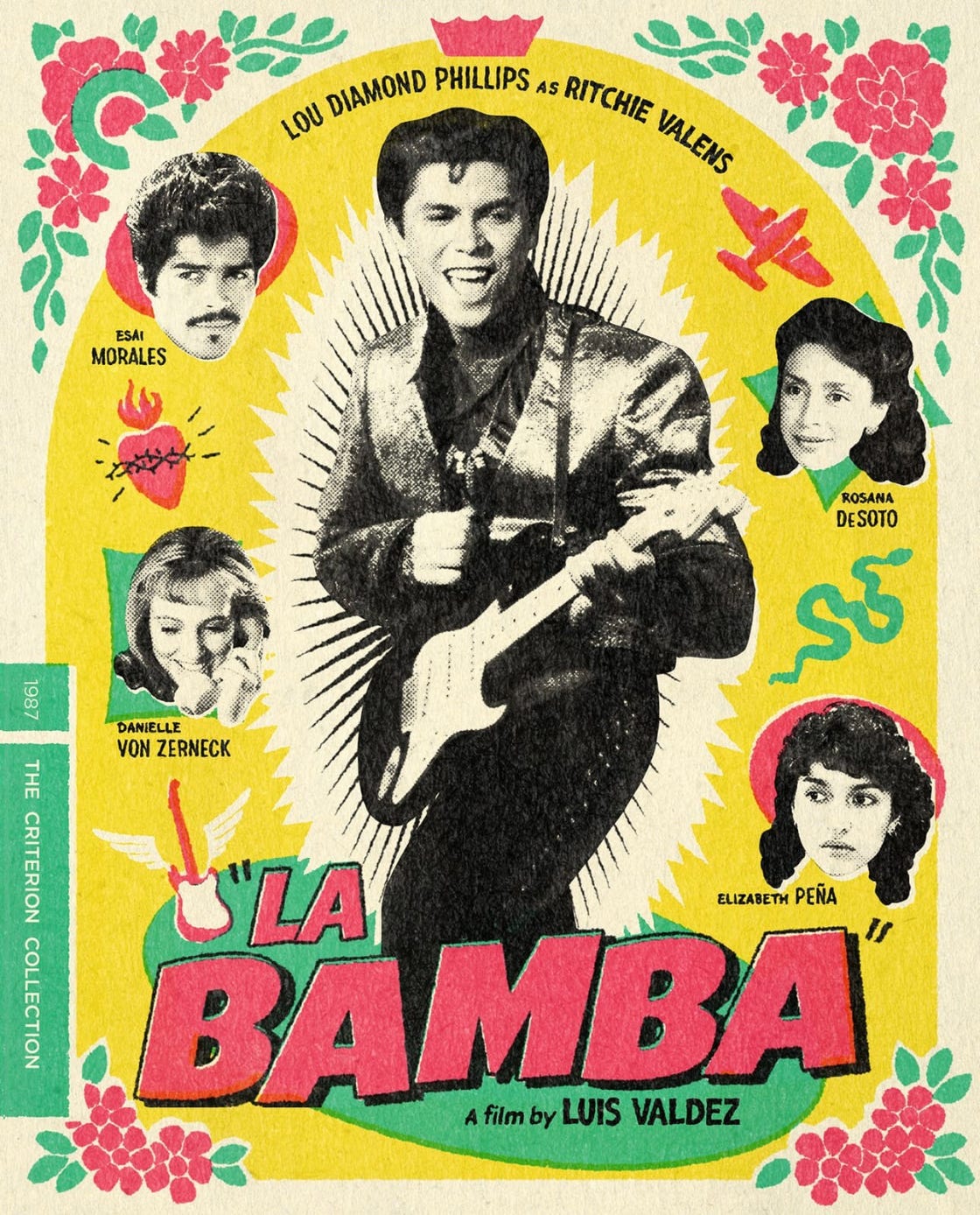
All that said, there was a moment in 1987 when Luis Valdez, Taylor Hackford and Columbia Pictures/SONY released La Bamba. Using Ritchie Valens as the vehicle and featuring exceptional performances by Rosana DeSoto, Lou Diamond Phillips, Esai Morales and Elizabeth Peña, something changed a bit. (The Criterion Collection released a special edition of the movie on Blu-Ray and DVD on September 26, 2023.)
After La Bamba, we had Stand and Deliver, American Me, Mi Familia, Selena, Real Women Have Curves, Mi Vida Loca but at some point, in my opinion, Latino-focused films fell off a cliff.
In 2026, we come back to Luis Valdez with the release of American Pachuco, directed by David Alvarado. With funding from California Humanities and no studio or marketing budgets, the documentary about Luis Valdez released at Sundance, then at select Film Festivals, then screenings in New York and Los Angeles until a path was created for cinemas in 35 cities in the USA.
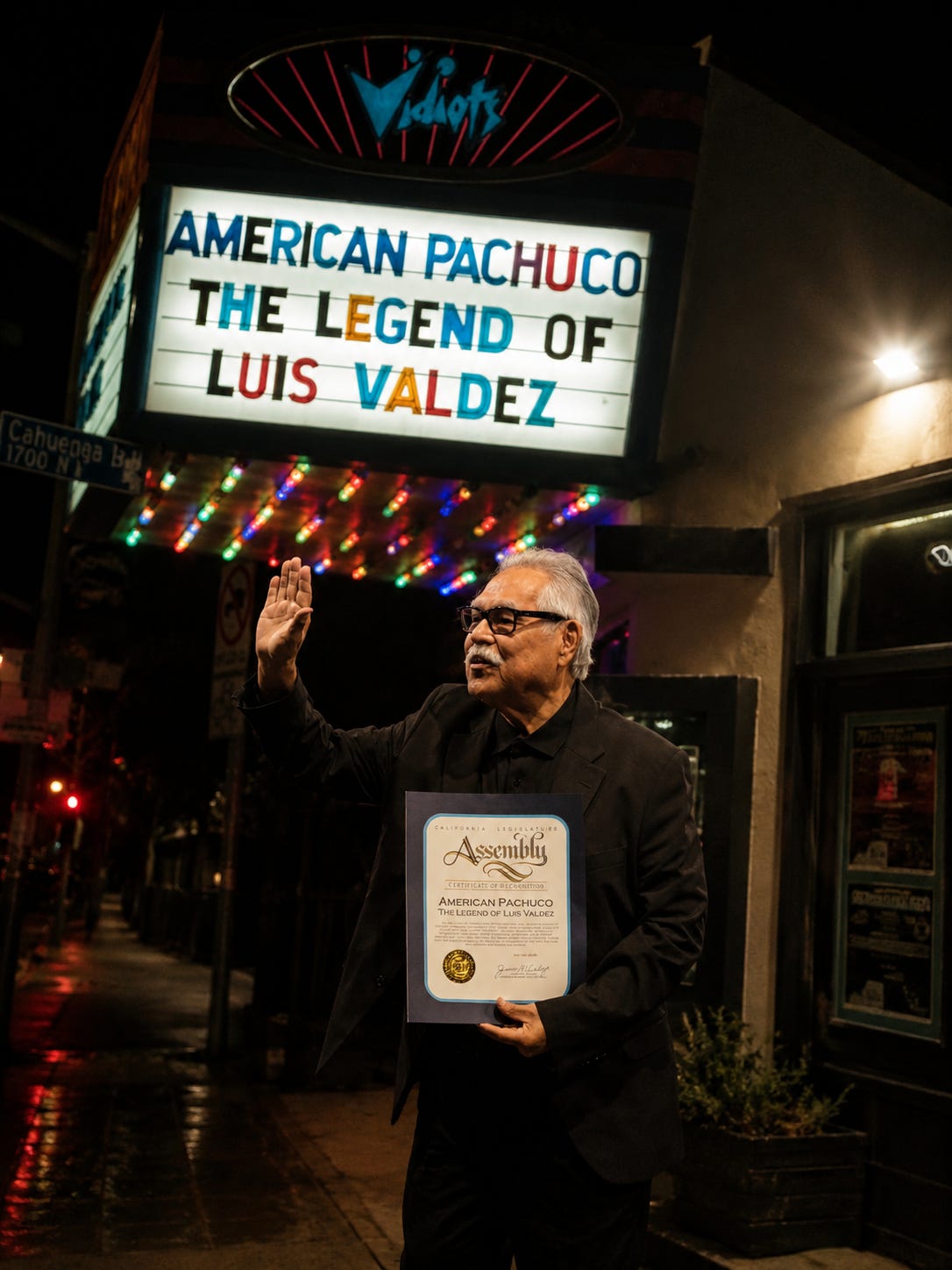
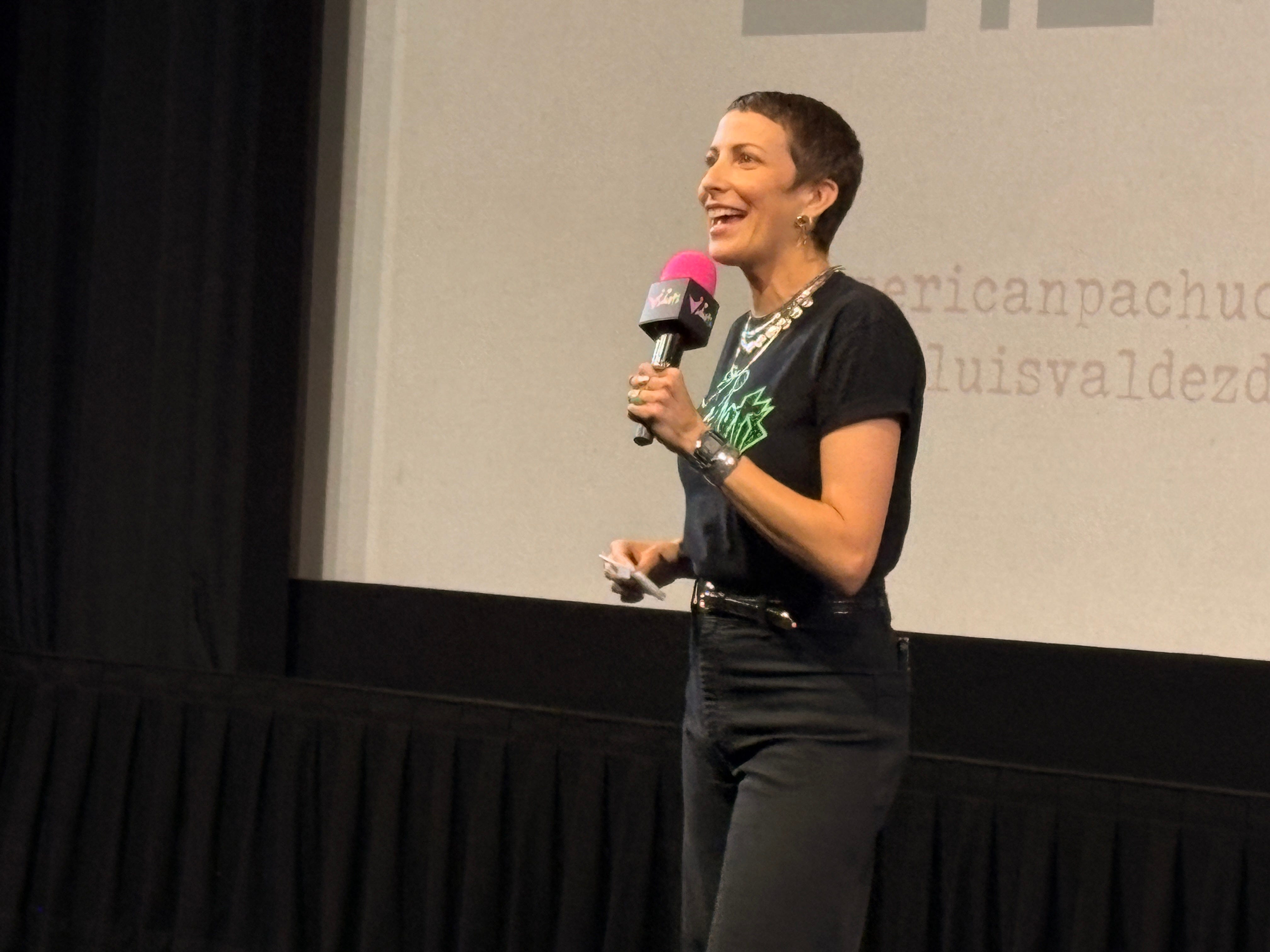
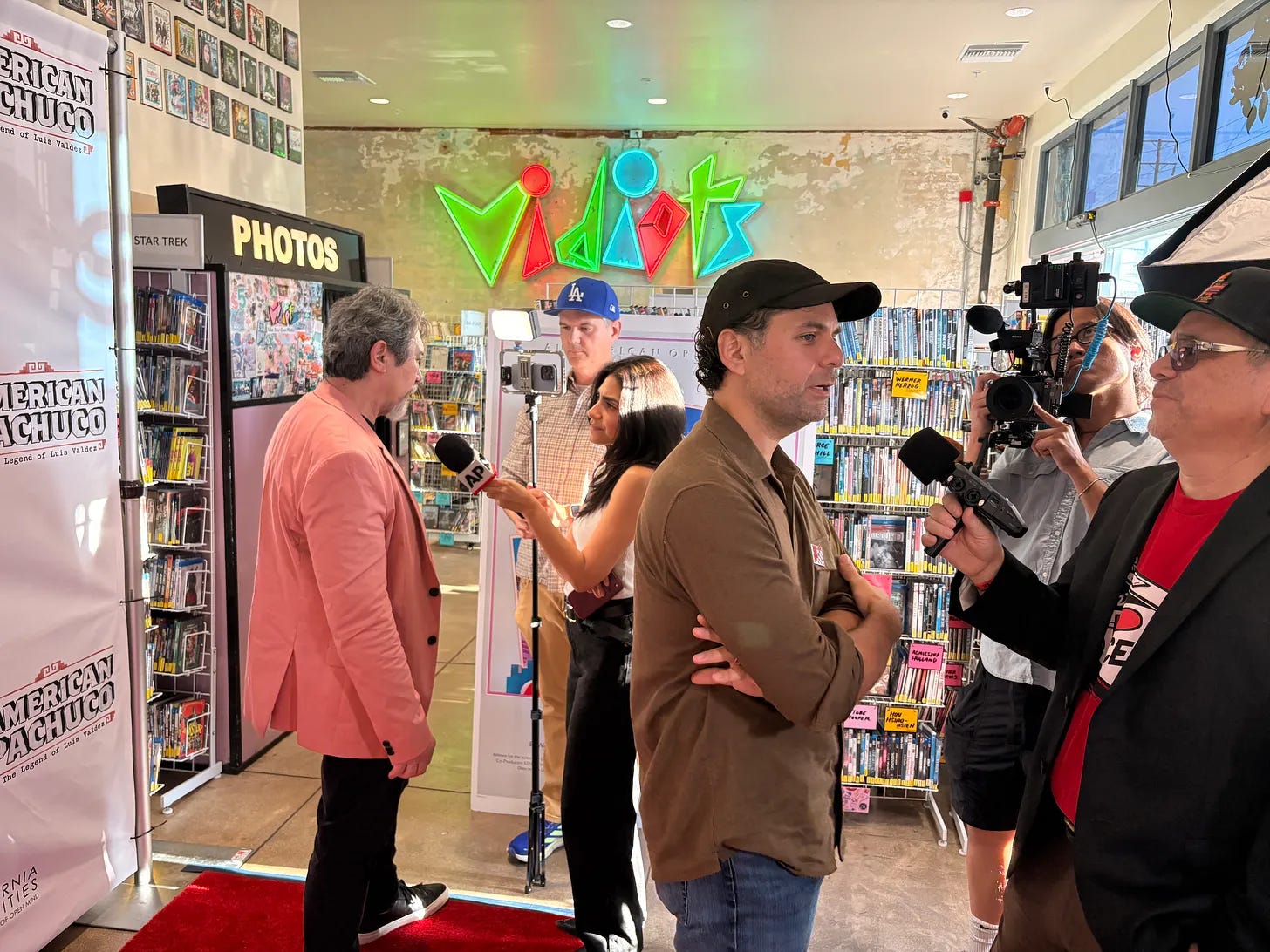
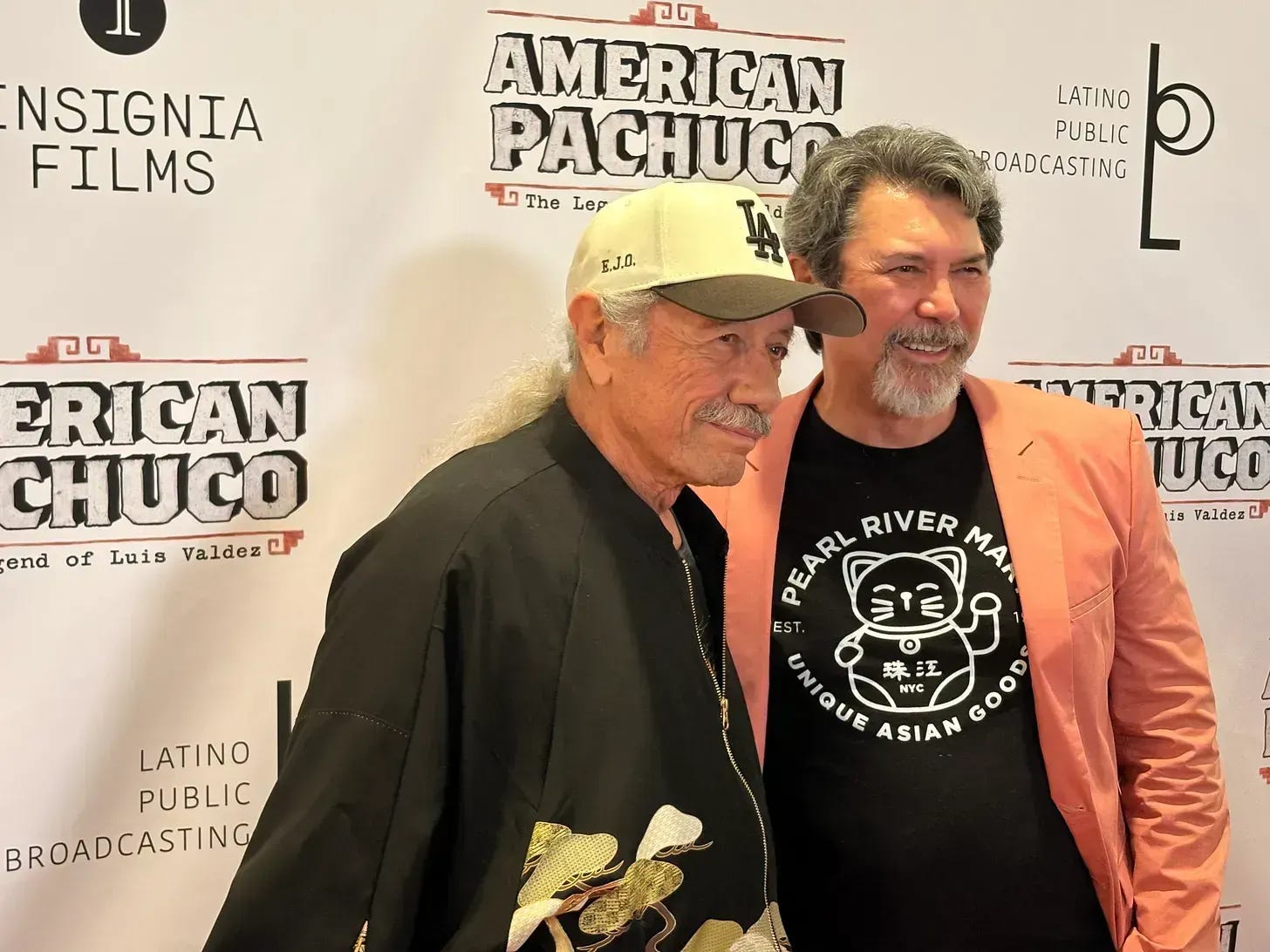
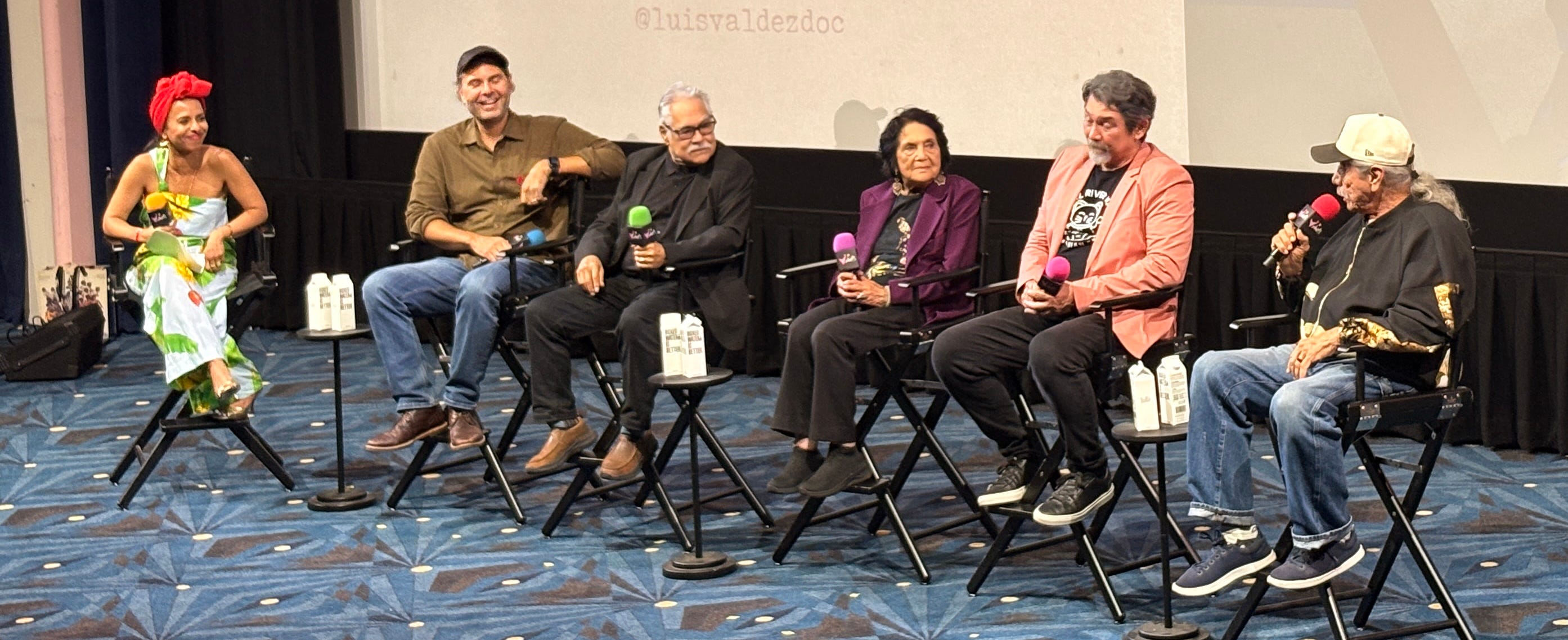
I attended the screening hosted by Amanda Salazar at Vidiots in Los Angeles. Here is an excerpt of my interview with her about the state of Latin American Films including the distribution of US Hispanic Films like American Pachuco:
“American Pachucho is playing in our micro cinema, as a programmer, working with the community, staff and the audience to put films up on screen. In one word, I think the state is hopeful. My access point is watching the audience come in, when we played Zoot Suit the next night after the premiere, we saw a young audience. Some of them brought their grandparents and their parents. If we encourage movie going, then the cinematic language will be a part of it and it becomes a very hopeful. There will be a whole new audience that perhaps doesn’t know Luis Valdez, or La Bamba, or Zoot Suit and his incredible history as a filmmaker and the documentary will be the starting point and then they will search it out. It is remarkable that David made a film like this. It’s exciting that there is an engagement with this work.”
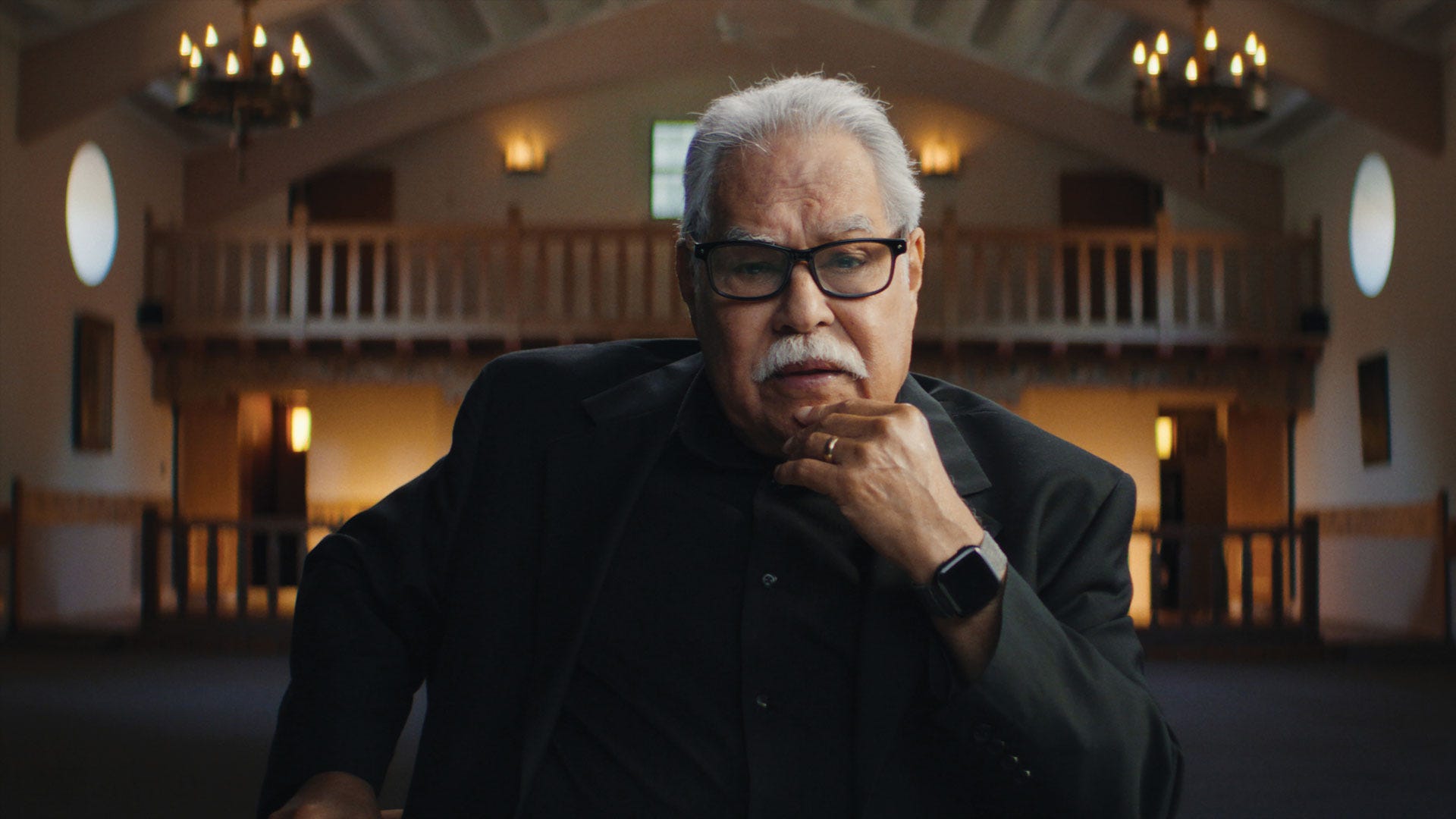
“I was asked to write a play about the history of Los Angeles by the Mark Taper Forum, and it seemed to me that this was a piece of the puzzle that had been there for so long, and not been dealt with. I had already created a character of El Pachuco in one of my plays called Bernabe. Cesar Chavez had been the running partner of one of my cousins, who was a Pachuco, and was knifed to death in Phoenix in 1955. So, this stuff has been around through my life, you know, for many, many years. For the character of El Pachuco, the coolness was very important, it was part of the street survival sense, which I recognize that Pachucos had. They were dangerous, but never-the-less, they were cool. And so, when we got back to the history of doing something about Los Angeles, I knew that L.A. had been the mecca of Pachuquismo. This was the big time man and it was a story that had been untold.” - Luis Valdez
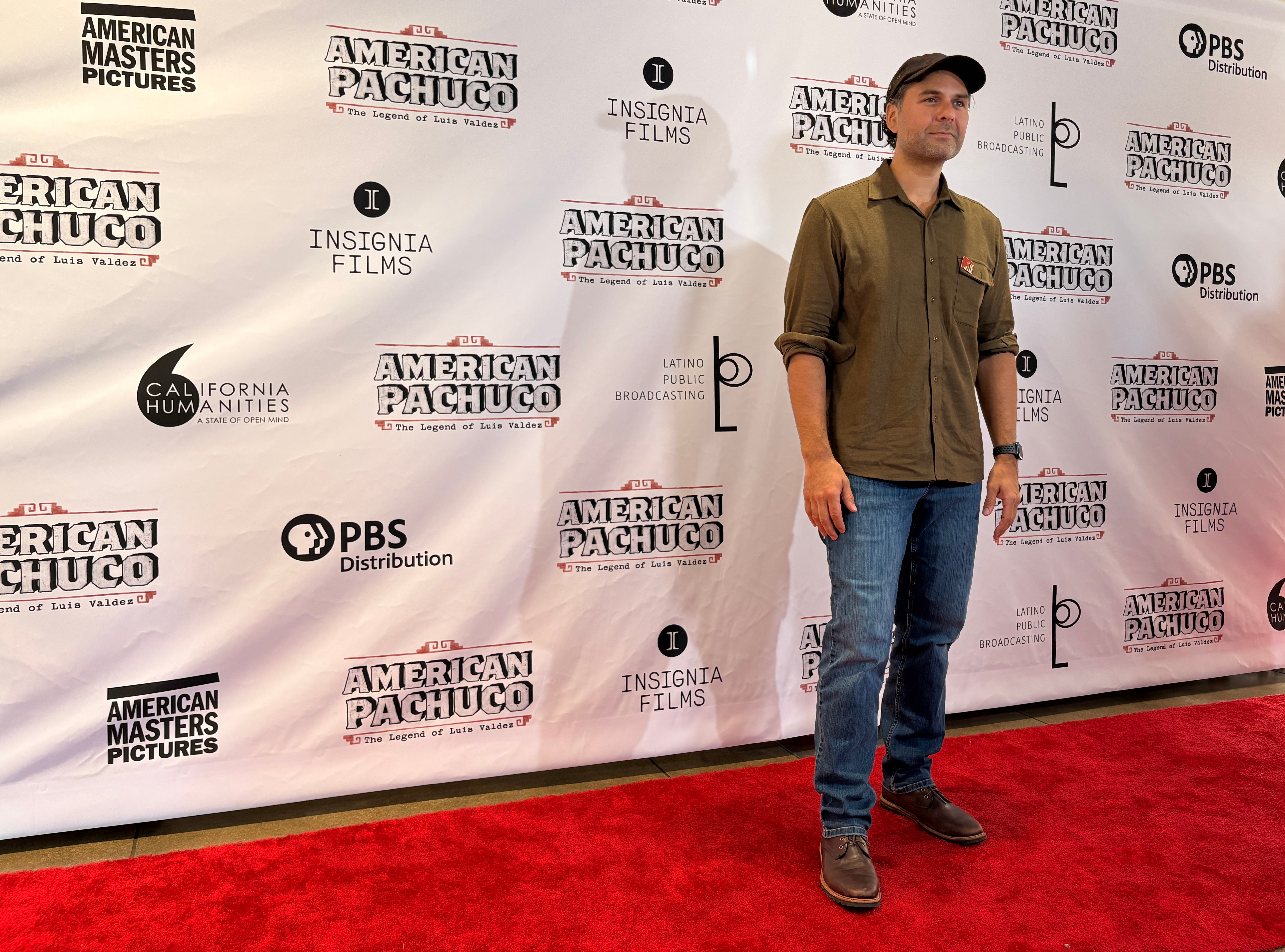
“It’s about identity, it’s about belonging in America. We felt like it would just became a challenge and a good challenge for us to try to get that word into the American lexicon because a Pachuco really is an American phenomenon. There was a lot of interplay between the border from America to Mexico with the idea of the Pachuco. But it’s a very American story in that, this is how people came to the country. They had to identify as not Mexicans anymore, but as Americans and what is that identity like? So that struggle was something we wanted to highlight.” - David Alvarado
Sergio: You’ve screened at Sundance, Film Festivals, New York, Los Angeles … at the screening that I saw, it was very elderly, niche industry, pachucas and pachucos, do you have a sense for what general audience Gen Alpha might think of this Chicano universe that is somewhere between Bertolt Brecht and Cantinflas?
David: It certainly is a discovery for a lot of people. I made the film for two audiences, the first row was for the Chicanos that know the story of Luis Valdez and I didn’t have to explain a thing to them but I wanted to give them a cinematic tribute to his life. The second row behind them was for the people who had never heard of Luis Valdez. Some of those people may have heard of La Bamba and they may start singing it but they don’t know much behind the scenes. We have Edward James Olmos reprising his role as El Pachuco and the first line in the movie, a line I wrote is: Ladies & gentlemen, it has come to my attention that some of you don’t know the story…. that’s one of a thousand things that was our effort to help folks along. I gotta tell you, there’s not a lot of Chicanos in Park City, Utah so I was curious how it was going to play and we were blown away by the reception and we got the audience award. I think it registers because we are at a moment in our time when the question of: Who belongs in America? Luis always addresses that question so now is the perfect time.
Sergio: What did your Mexican father expect of you at the age of 16 in Texas?
David: I was a troubled kid and I didn’t fit in to the culture in suburban Dallas, Texas. He was always trying to get me work with his buddies but I was interested in the arts and I didn’t see the path from school to the arts. I wanted to be with the skate kids and the punks. I remember telling him that I wanted to go to film school and he responded with, I think you should go to business school. He, rightly, thought that I had a good business acumen and I was so rebellious. When I did end up going to college, I met Luis Valdez and he showed me a path.
Sergio: It seems to me that you became an experienced documentarian shooting challenging edge scientific concepts. Aubrey de Grey, Bill Nye, Stewart Brand and then, you come back to a meeting you had with Luis Valdez. After watching the Immortalists, I can’t help but think that through Luis Valdez and through Eddie Olmos and through your audio narration, El Pachuco actually has the ability to become immortal. What say you?
David: I think he was immortal before I was born. A bomb dropped on that stage in 1978. I just tapped into it in 2022. I never saw the play production, just the film version. It was Shakespearean. El Pachuco was a Puck figure that could freeze time and space and interact with the audience. I ended up thinking: Wouldn’t it be great if that same character had the same power and find his way into the documentary about his creator’s life story. It is a continuation of the power of that character.
Sergio: In the evolution of your career as a filmmaker living in Brooklyn making thoughtful documentaries, what do you think Prosperity means to you?
David: As an artist, I wake up every morning and I brew a giant cup of coffee and I have an office in my house and it takes a lot of discipline and I’m exhausted at the end of the day and I just feel privileged. I wasn’t born in privilege, I paid my way through college, I ate ramen noodles for the first half of my career. When I made The Immortalists, I was living on people’s couches. But now I am midway through my career and I know what I am doing and I’ve given up on pitching the streamers. They didn’t pick up on American Pachuco. Luis did it this way and I am too. Nobody is opening up the gate for me, you just have to jump the wall. I’ve been doing that all my career and I am going to continue to do that. I wouldn’t trade it for anything.
Sergio: Taylor Hackford has been speaking in several different spaces about the business success of La Bamba. If you ask me, after the era of La Bamba, I think Latino forward theater fell off a cliff. Why if it was such a business success did that happen? I think given what I’ve seen, you could be the Latino Taylor Sheridan making Latino stories in the Fort Worth area.
David: Luis talks about that a lot. Tyler Perry, Oprah, it makes good business, I may be able to build a little empire. Let’s see how that goes. I’d love to do more with the Luis Valdez story because we only touched on half his career. We are making the recordings available to UC Santa Barbara. We are doing the theatrical distribution ourselves out of pocket. We are launching a Kickstarter. We did a successful one with the Bill Nye documentary, so let’s see if the younger generations are interested in crowdfunding.
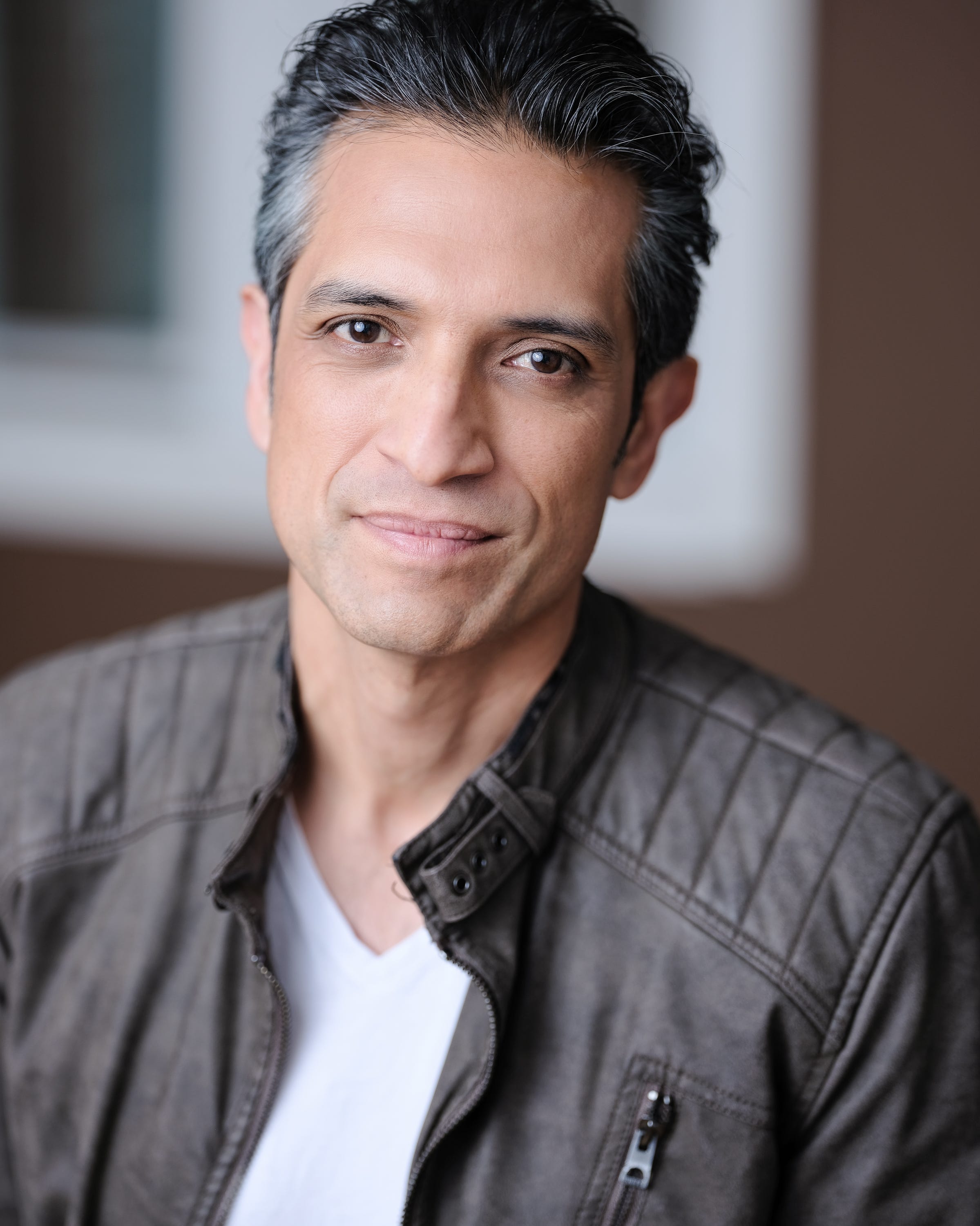
I sat down with René Millán to go deeper. Here are excerpts from that interview:
Sergio: How do you self-identify?
René: I grew up in San Diego and the hotspot of Chicano Park made me a Chicano. My Mexican father from Guaymas, Sonora, didn’t want to be a part of the Chicano movement. My mom was from Guadalajara.
Sergio: At the age of 16, where did you find yourself socio-economically?
René: We definitely were not wealthy. We were lower class. My father was a janitor and he worked for the county of San Diego cleaning offices. My mother cleaned houses. There were seven of us in 700 square feet in Barrio Logan. I was expected to go to school, study, don’t get into trouble or gangs. My father tried to control everything in the house as a strict Catholic man. I used to think: Don’t get caught getting into trouble. I wa sthe youngest of all the children in our family so….
Sergio: Did acting come first or did theater come first?
René: My father plays a big role in me becoming an actor but not because he wanted that for me. Quite the opposite, he did not want me going into the arts. But he got involved as a Choruster in the San Diego Opera in the 60s and when I was eight years old, he took me to see Puccini’s Turandot and that was it for me. He took all my older brothers as well, it was a rite of passage in our family. He prepped me before we went. I read the libretto. I knew what was going on when I got to the San Diego Civic Theater. It was packed and it was the nosebleeds, the lights, the music, it was one of the most incredible moments of my life. My dad took me backstage and the folks took me out on stage and it planted a seed that I took with me for the rest of my life.
Sergio: You got an MFA in Theater from the University of Washington, is that when you began to get aquainted with Luis Valdez?
René: I fought for Chicano Park when they wanted to paint over the murals. I understood the movement. It always interested me but I wasn’t allowed to be a part of it while living under my father’s roof. In 1987, my introduction to Luis Valdez was through La Bamba. These were our first depictions on film. Especially at the beginning of the film during the farmworker scenes. Before that, I didn’t see any of the El Teatro Campesino plays, I didn’t see Chicano theater, that came much later in my life. But I did study Chicano theater in grad school. I went way deep and I started performing in plays by Octavio Solis and Luis Rivera. Then, I performed in I Don’t Have To Show You No Stinking Badges in Minneapolis. I did a reading of El Pachuco in Zoot Suit as well. I was offered the role twice but scheduling never allowed.
Sergio: Do you have an Eddie Olmos story?
René: Yes, I grew up watching Miami Vice and then I saw the Zoot Suit movie in the 80s. I loved it. In 2006, I did Shakespeare in Oregon and Eddie Olmos came to see a show where I was performing called King John. He took me out to dinner afterwards. He was such a good human being to me. He made such an impression on me because he came out to Ashland from his schedule shooting Battlestar Galactica to see a young Chicano performing Shakespeare. It meant a lot to me.
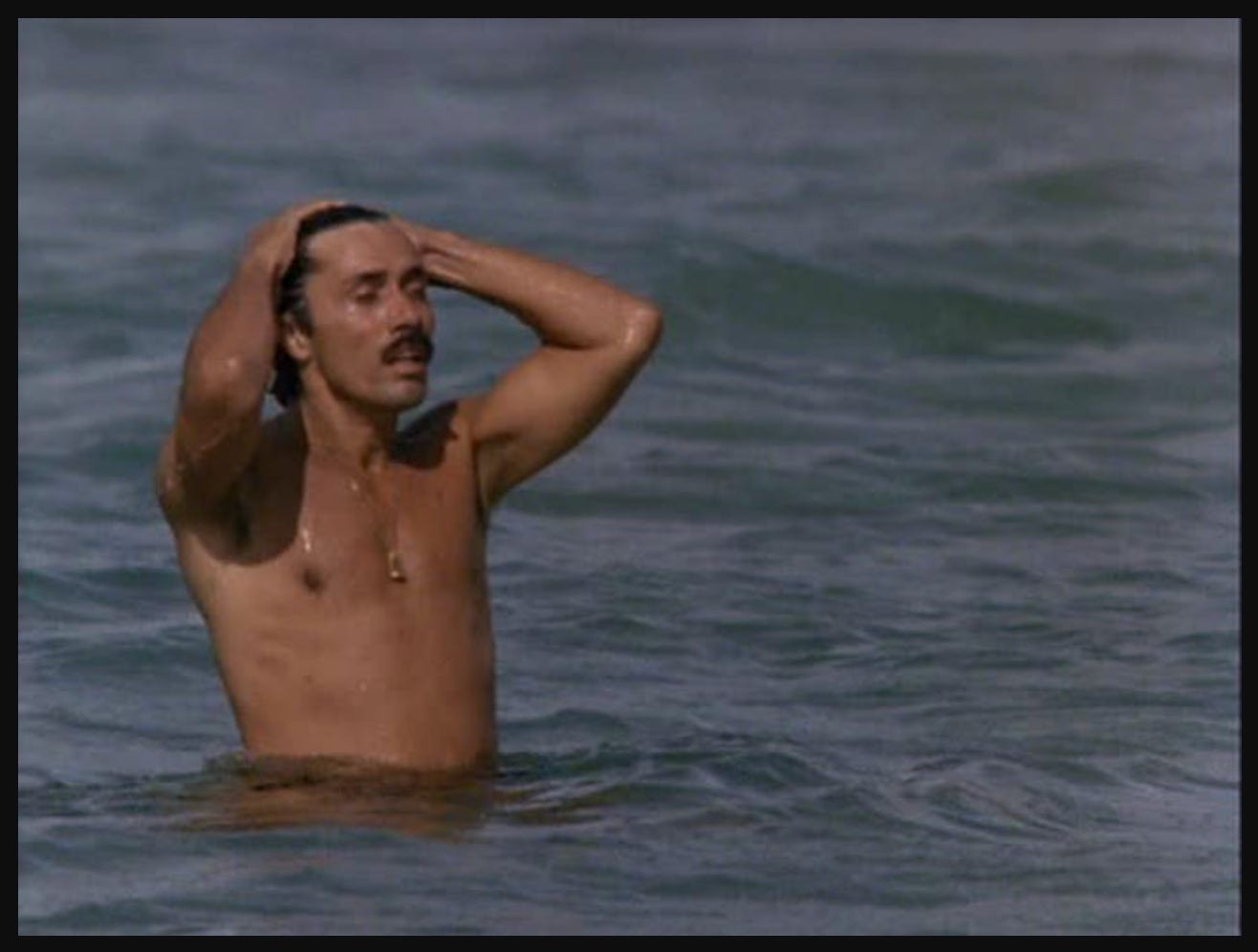
Sergio: I might vote that his best work was as Castillo in Miami Vice.
René: He has done a lot of great work.
Sergio: The doc says that Luis and Eddie got pummeled when they took Zoot Suit to Winter Garden. Were you ever on Broadway?
René: Yes, I was in The Wild Party. Was playing somebody ambiguous. Written by George C. Wolf. I was a swing, an understudy that would have to be at the theater every night to cover for somebody. I would replace actors that have to leave for whatever reason. So, I did get my Broadway debut but I didn’t get covered for my role. Broadway has it’s own issues and Zoot Suit on Broadway, at that time, Chicanismo, Mexican Americans on the East Coast, we didn’t exist out there. West Side Story did better because it’s depicting Puerto Ricans but Zoot Suit is a Chicano show written by a Chicano artist in a completely different language and rhythm. It must have been a culture shock.
Sergio: What are your thoughts on La Bamba?
René: That story hit me hard. That montage when they die in the plane crash. It hits so many notes. Coming from playwriting and poetry and using language, but in this montage, we are allowed this energy without hardly any words. You see Bob under the car, you hear Rick Dees, he comes out and all you see is reaction, running to his mom’s house and you see the mom with the laundry and there is no language and it just takes your heart and it takes it right out of you. The funeral procession and then Bob’s final yell … Ritchie! Seeing it now in my own head, Luis Valdez who weaves language so beautifully in his career but in this montage, there isn’t that much language and it’s still so special.
I know that Luis and his kids focused on Theater of the Sphere. It’s like performance training. The teaching of storytelling through a psycho-physical lens. His legacy is not just Zoot Suit and La Bamba. He created this whole non-Stanislavsky way to prepare performers for their craft. It’s really powerful.
Rasquachismo is also very powerful. I was never a writer but I have had to write a full length play. I can’t wait for anybody to cast me in anything. I’m just making things work. We mcgyver everything with duct tape and swiss army knives. We are resourceful. You can’t keep us down. We do it our way. You can’t stop a storyteller from telling his story. We can make a stage out of anything.
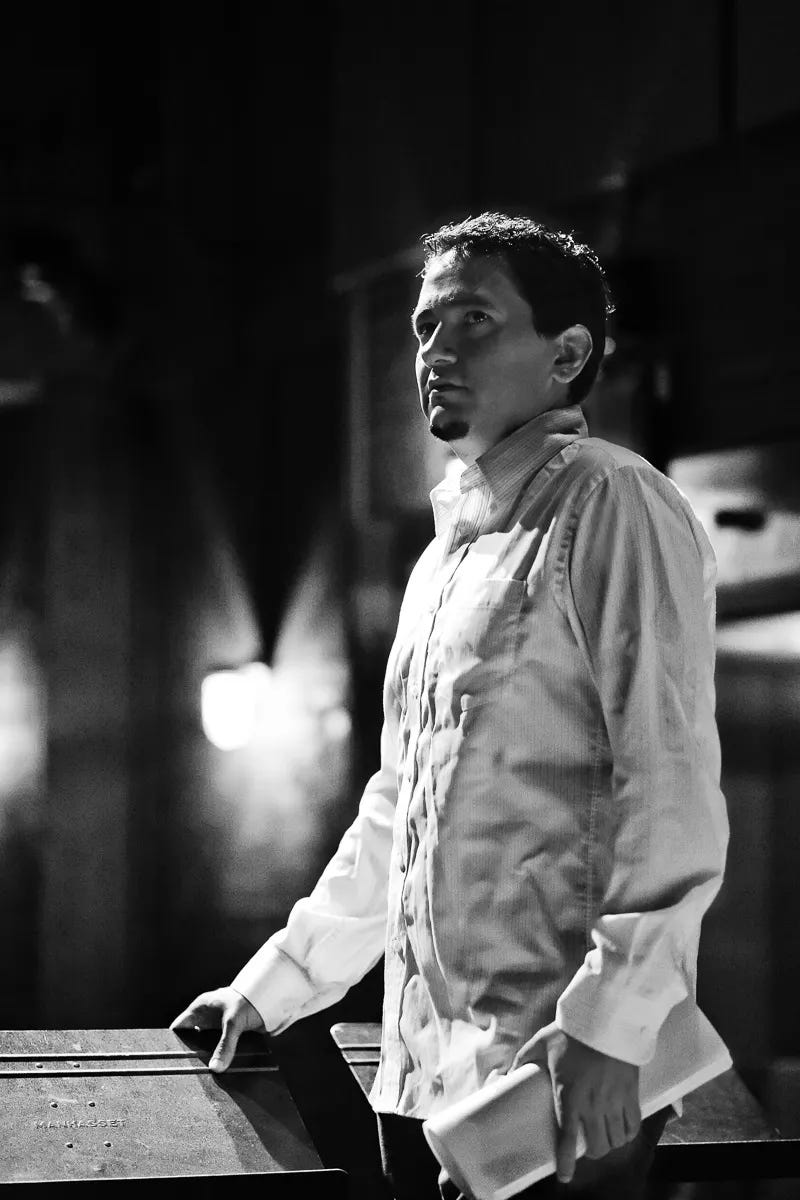
I sat down with Tlaloc Rivas to go deeper. Here are excerpts from that interview:
Sergio: When did you connect with El Teatro Campesino?
Tlaloc: I saw La Bamba at a screening in Watsonville where the Valenzuela family was from. I sat behind Rosana DeSoto. When I started college, I realized that El Teatro Campesino is 30 minutes from Watsonville. I drove there and met with Phil Esparza and he said I could clean the toilets and sweep the floors. That was my interview. I was assigned to Milt Commons, the Stage Manager for Zoot Suit at the Taper. He did all the Christmas shows at ETC. Then, I became the Assistant Director for the Virgen de Tepeyac. Then, I became a Director. I maintained my connection to Luis Valdez and his brothers. My directing thesis was for The Shrunken Head of Pancho Villa. I received a presidental award at UC Santa Cruz for that production.
Sergio: Did you connect to El Pachucho through Zoot Suit?
Tlaloc: I was seven years old, my parents went to LA to see the play. My dad was in the Chicano movement. I remember looking at the figure of El Pachuco, the artwork of Eddie Olmos, I became fascinated. My godfather was Corky González so through him, I was close to the Chicano movement. I talked to my dad about where it all came from. Some folks think El Pachuco originated in El Paso. I then saw the movie in college and I went down the rabbit hole to investigate the history of the riots. I also kept reading more about it all during my time at El Teatro Campesino. Ten years ago, I saw a production by Kinan Valdez where there was a woman playing El Pachuco. It’s such a mythic role of the archetype of the Chicano. Black and red in his costume, it symbolized the shapeshifters of Africa. He’s a trickster, a shapeshifter. When I screen it for my students present-day, I find something new and essential and I hope that my students meet the work on their own terms.
Sergio: How did you experience La Bamba?
Tlaloc: I was a big fan of Los Lobos and I heard that David Hidalgo was going to sing the Ritchie Valens songs and so that became my entryway to La Bamba. At one point in my career, I was asked to change my name a’la Ritchie Valens but I didn’t do it. I re-watched the Criterion Collection La Bamba a few nights ago. As Latinos, we finally got to see somebody make it and our first Chicano rock star and just nine months into his career, he was gone. It’s a story that still matters to a lot of people.
(Editor’s Note: The ultimate irony in this hype from Wyclef is that neither Ritchie Valens nor Luis Valdez are/were immigrants in America.)
Sergio: After La Bamba, did Latino-focused films fall off a cliff?
Tlaloc: The 90s were pretty contentious for me. We could only play prostitutes, gangbangers, the help, there were some really key movies like The Ballad of Gregorio Cortez, El Norte, Tortilla Soup, Mi Vida Loca, American Me, there were just more independent films being made. The year of the Latino, the rise of neoliberalism, NAFTA, Ricky Martin, Gloria Estefan, it seems like there was a time when we had finally made it and then nothing really happened.
But we did start to see a whole new generation of playwrights that were inspired by Luis Valdez in the west and María Irene Fornés, a Cuban playwright, in the east. Up until you get to Lin Manuel Miranda, who is a gamechanger. There came a point when we took over Star Wars with Diego Luna, Rosario Dawson, Pedro Pascal, Oscar Isaac …. La buena onda group, Alejandro González Iñárritu, Alfonso Cuarón, Guillermo del Toro, these guys went truly global. Guillermo is puro mexicano. He is funny, crazy, dark sense of humor, we hold on to that because of the absurdity of this country right now, we have to either laugh at it or rage against it.
Sergio: American Pachuco wasn’t picked up for distribution at Sundance. I don’t think David Alvarado wants to be doing it rasquachi if he could get it to be supported. It can’t be well-received in the greater scheme of things because they don’t have enough muscle to market the film.
Tlaloc: Luis Valdez is so important for the next generations. We may not see the immediate impact now. Perhaps if it can get distributed by PBS, the trailer seems very exciting. I plan on seeing it in Atlanta if it gets there and I hope to screen it at UNCA. I’d also like to get Zoot Suit to North Carolina.
Regardless, kids are going to start making their own digital movies and circumventing the studio system. I really admire their rasquachi spirit. We’ve been upcycling and recycling since those were even words.
Here is a bootleg video of Jsu García riding on the coattails of El Pachuco in his role as Manolo. This was one of my favorite films during that era. It wasn’t necessarily Latino-forward but it did feature Jsu García, a Cuban, born in New York City. In the film Gotcha!, he plays a Mexican American student at UCLA. He is the best friend of the protagonist. Although the film ties him to terrorist cosplay and to gangbanging, his character Manolo, steals all the scenes he is in because of his good looks, charm and confidence. For me, Manolo was the inspiration & offspring of the American Pachuco in the context of youth in American society.
Here is the Kickstarter to support the release of the documentary: https://www.kickstarter.com/projects/byeverett/american-pachuco-the-legend-of-luis-valdez
#Intelatin #Media #Film #Documentary #AmericanPachuco #LuisValdez #DavidAlvarado #ZootSuit #LaBamba