
On Prosperity: Samuel Douek
By Sergio C. Muñoz at Intelatin, LLC
This series is created & produced by Sergio C. Muñoz at Intelatin, LLC | AMA: smunoz@intelatin.com
Pilot on PBS Studios (KLCS) with Wil Dog of Ozomatli
Monthly via Caló
Monthly via the ZZK Records newsletter
Monthly via the US Hispanic Business Council (USHBC) newsletter
Sponsored by Santa Prisca & Co
In 2026, we will begin filming new episodes at A Place Called Home (APCH) with Anthony Valadez as the Creative Director
Samuel Douek
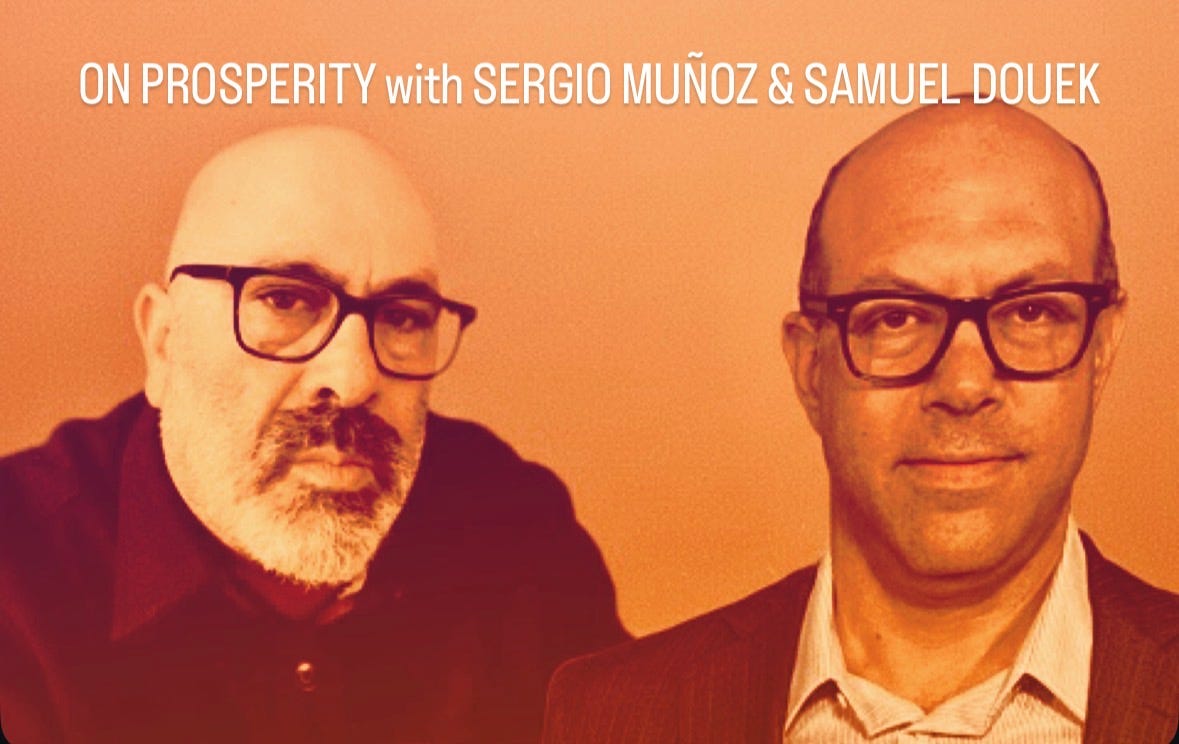
Sergio: How do you identify?
I am a Jewish Mexican.
Sergio: Please describe your childhood home?
I lived on a busy street full of buildings. My building was next to a chocolate factory. My father used to bring home cookies every day. It was seven floors, light brown, glass balconies, a garage. It was in Polanco. I lived there with my parents and my older brother.
Sergio: Where were you situated economically?
In relation to the whole Mexican population, I’d say that we were very fortunate. When I was older we moved to Bosques de las Lomas and that was really when I noticed that we were very privileged. We were very lucky.
Sergio: What was expected of you at 18?
When I finished high school, I did an “ajshara” in Israel. I was a volunteer in a kibbutz. Then, I was expected to go to college and I did so at Anahuac University. It was a great moment in my life. I started working at SONY music. I was making $120 per month but I was gifted with a lot of CDs. Then, I did an exchange program in Sydney, Australia and that changed my life. When I went to do my Masters program in Event Management, I was able to do it in Sydney. I stayed there for about ten years after my Masters.
Sergio: What was it about Australia that you loved so much?
Everything! It was safe, secure, modern, clean, the beach looks like Cancún, friendly, smart, high quality of life. There were students from all over the world and I made friends easily. The coffee is the best I have tasted in my whole life. By then, Mexico had become very unsafe. In the 70s and 80s, it was a paradise and you didn’t have to worry about being kidnapped. In the 90s, everybody began stealing Jeep Cherokees. My friend was kidnapped. The poor and the rich, the castes, they got really bad and I didn’t feel good about it. It’s still bad. But my father had a saying: Don’t worry about anything except working hard and don’t worry about things you can’t control. I launched the HOLA Mexico Film Festival in Sydney, Australia. Then, in New York in 2007. I first made it a traveling festival in the USA but after doing it in LA, I met my future wife Sahar and then I got my papers so, it worked out for me in Los Angeles. We’ve been doing the festival in LA for 17 years.
Sergio: What is the big picture of the Film Festival in 2025?
It is an event where you can meet the director, the actors, we bring films that haven’t premiered and aren’t online. We have parties. A lot of volunteers. We engage with sponsors and we have ticket sales. This year, we continue on with Toyota as our presenting sponsor. The events bring pride to the community and help support Mexican stories and Mexican filmmakers.
Sergio: Do you love Los Angeles as much as you love Australia?
When I first got here, it felt like Mexico to me with traffic and some of the other negatives but it has gotten great for me. LA feels like the center of the world. Its the second largest Mexican city in the world. Its also the second largest Persian city in the world and my wife is Persian. I feel like I oftentimes go from Mexico City to Tehran in LA and you can’t do that anywhere. Mountains, hiking, industry, weather, ok coffee … I used to have to drive to Silverlake to get good coffee and I don’t have to do that anymore.
Sergio: Describe your current home now in LA…
I live in Studio City and I love it here. Six minutes to Hollywood. Easy to Downtown. Plus the North Valley and Santa Monica when traffic permits. I feel like I am in the middle of everything. I live in a single family residence with my wife and my children.
Sergio: Can you compare Samuel economically today to Samuel at 10-years-old?
About the same. Both have been very lucky.
Sergio: Can you define your Prosperity for me?
Prosperity is being able to enjoy life with those you love! Accompanied by good food, music and films! When you prosper equals the amount of love you have given and received equals a positive amount.
Sergio: Let’s talk about my problems with the film industry. I believe that there are so many incredible, thoughtful films being produced in Latin America, and in Mexico specifically that never get released in the USA. At all, like I’m not just talking about film screening in the cinema with 70mm, I am talking about the only place that you can see a fraction of these films is on Criterion.com. Do you agree with me?
Yes and no. In general, yes, film festival programming will not end up being popular films. Most folks want to watch easily accessible commercial films that aren’t as challenging. Film Festivals like mine, show both types of films, arthouse and commercial. We are trying to showcase everything about Mexico. I love the cinema experience much more than watching a film at my house. Netflix changed everything dramatically. I liked it when you watched the trailer, you got excited, you read the festival coverage, then it would come out in the cinema and you would get two months there, then you could buy the DVD, and now its just straight to streaming with no noise and no promotion.
Sergio: Give me the breakdown of Mexican films in LA…
200 get made per year. 10 get released in the cinema, maybe less. 20 play at the HOLA Mexico Film Festival.
#Intelatin #Film #Latinos #Latinas #Hispanic #Movies #Mexico
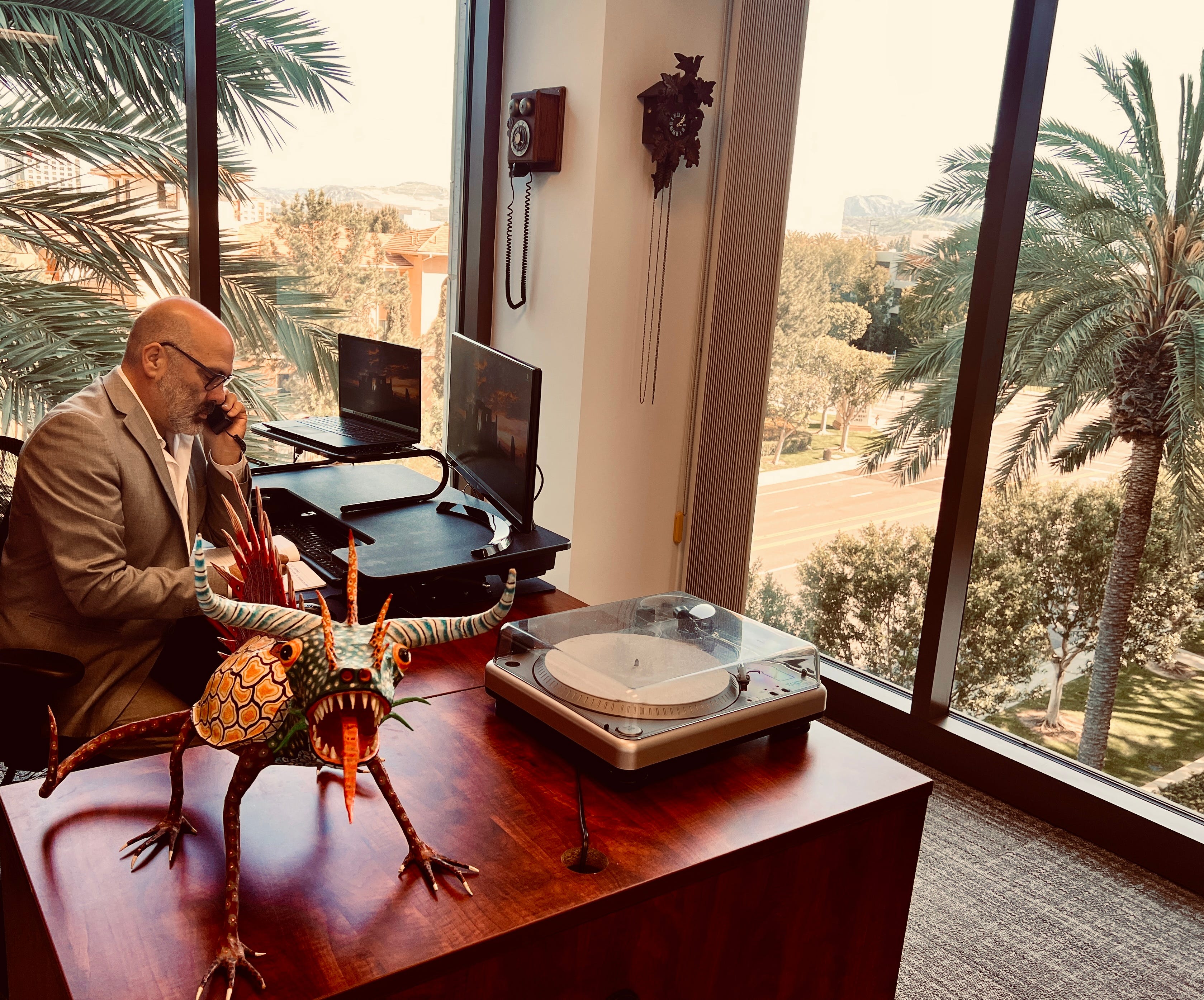
Sergio is a Mexican banker writing on Latina/o Prosperity. His work has been featured in the US Hispanic Business Council; Caló, the Los Angeles Times, the OC Register, PBS, NPR, WNYC, Revista - Harvard Review of Latin America, Studio 360, Latino Leaders Magazine, Poder Hispanic, Animal Político & ¿México Cómo Vamos?
To support my work, please consider purchasing a sample of salt from our sponsor, Santa Prisca & Co: https://bit.ly/Intelatin - Many years ago, I studied the salt exchange with Jing Tio at Le Sanctuaire. I have also done special projects with the artisans cultivating in the Sea of Cortez and the Pangasinan region. This year, after a tasting menu with the CEO of Santa Prisca, hand harvested by salineros in Cuyutlán, Colima, Mexico, I am using this salt exclusively for all my high profile culinary tasting events with musicians.